
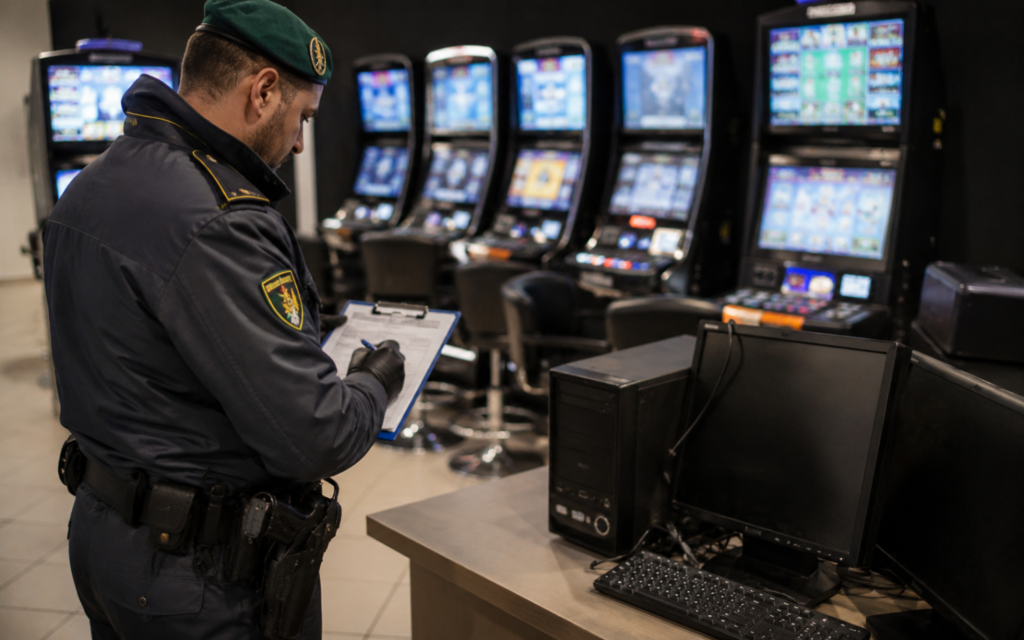
Italian authorities have shut down two illegal betting collection centres in Sicily after a coordinated enforcement operation uncovered unlicensed gambling activity and gaming terminals allegedly operating outside the country’s regulated system.
The operation was carried out by Italy’s Customs and Monopolies Agency (ADM) alongside the Guardia di Finanza during inspections across 14 betting shops and gaming halls in the province of Agrigento. Officers visited premises in Agrigento, Favara, Raffadali, Palma di Montechiaro, Campobello di Licata, Ribera and the Pelagie Islands as part of a wider campaign against illegal gambling.
Investigators discovered two venues functioning as unauthorised betting collection centres. At one site in Porto Empedocle, officials seized two computer terminals that were not connected to Italy’s national gaming network and lacked the mandatory identification codes required for licensed equipment. According to authorities, the setup allowed betting activity to bypass official monitoring systems, raising concerns that the machines could evade the country’s single national gaming levy (PREU).
The owner of the Porto Empedocle premises has been referred to prosecutors in Agrigento on suspicion of operating illegal betting activities, while administrative penalties exceeding €20,000 were imposed during the operation. Authorities stressed that the investigation remains ongoing and that all individuals involved are presumed innocent unless proven guilty in court.
The enforcement action comes as Italy continues to intensify its campaign against unlicensed gambling operators. Recent operations in other regions have resulted in the seizure of illegal gaming machines, the suspension of betting licences and significant financial penalties, with officials highlighting the need to protect consumers, prevent underage gambling and limit criminal involvement in the sector.
The latest crackdown also takes place amid ongoing debate over the future of Italy’s regulated gambling market. Industry representatives have warned that repeated extensions of existing gambling concessions have delayed broader reforms, arguing that prolonged regulatory uncertainty risks pushing more betting activity toward unlicensed operators rather than strengthening consumer protections.