
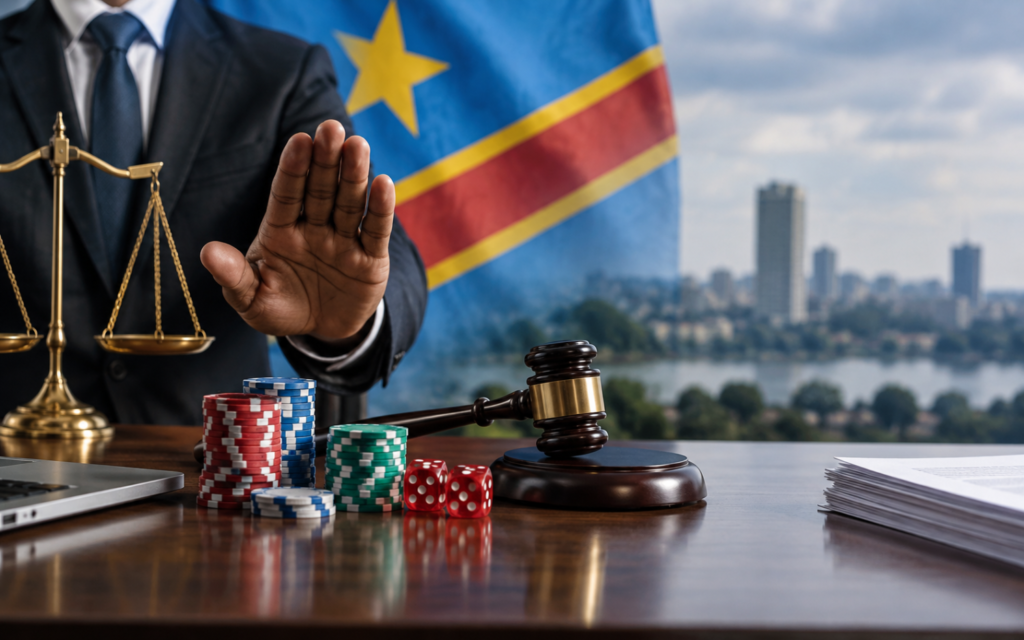
The Democratic Republic of Congo’s Ministry of Finance has reinforced its position as the sole government authority responsible for regulating the country’s gambling industry, as officials push ahead with wider reforms aimed at improving supervision and tax collection.
In a statement dated 27 August, the ministry reminded operators that Ordinance No. 25/293 transferred responsibility for gambling regulation from the Ministry of Sports and Leisure to the Ministry of Finance. The government said the change was intended to remove uncertainty over which institution has legal authority over the sector.
Operators were also warned not to comply with payment demands, approvals or other administrative requests issued by bodies that no longer have the legal power to act in gambling matters. Any suspicious or unauthorised demands should instead be reported to the Ministry of Finance and the Directorate General of Administrative, Judicial, State Property and Equity Revenues, known as DGRAD.
DGRAD has been instructed to identify improperly issued payment notices and take steps to have them cancelled. The ministry added that licences, authorisations, payment requests or similar decisions issued by unauthorised departments have no legal effect. That does not remove operators’ existing obligations to make legitimate payments to the Public Treasury.
The intervention forms part of a broader attempt by the Congolese government to bring greater control and transparency to a gambling market that has struggled with weak tax enforcement.
Finance Minister Doudou Fwamba previously estimated that online gambling operators were generating about $1.7 billion in annual revenue while contributing only around $1 million in taxes. Industry participants have also pointed to a system heavily dependent on operators declaring their own activity, making effective government monitoring difficult.
To address those problems, the Ministry of Finance announced plans earlier in 2026 for a centralised monitoring platform designed to give authorities greater visibility over gambling activity and improve the collection of public revenue.
The government is also working on a wider overhaul of gambling legislation. Documents published by the International Monetary Fund show that the DRC has committed to developing a new legal framework and establishing a dedicated Gambling and Related Practices Regulatory Authority. The proposed reforms are intended to strengthen taxation, improve sector governance and support efforts against money laundering.
The Ministry of Finance’s latest warning therefore reinforces a wider policy direction: gambling regulation is being centralised under financial authorities while the DRC prepares new systems and legislation designed to give the state tighter control over licensing, monitoring and tax collection.