
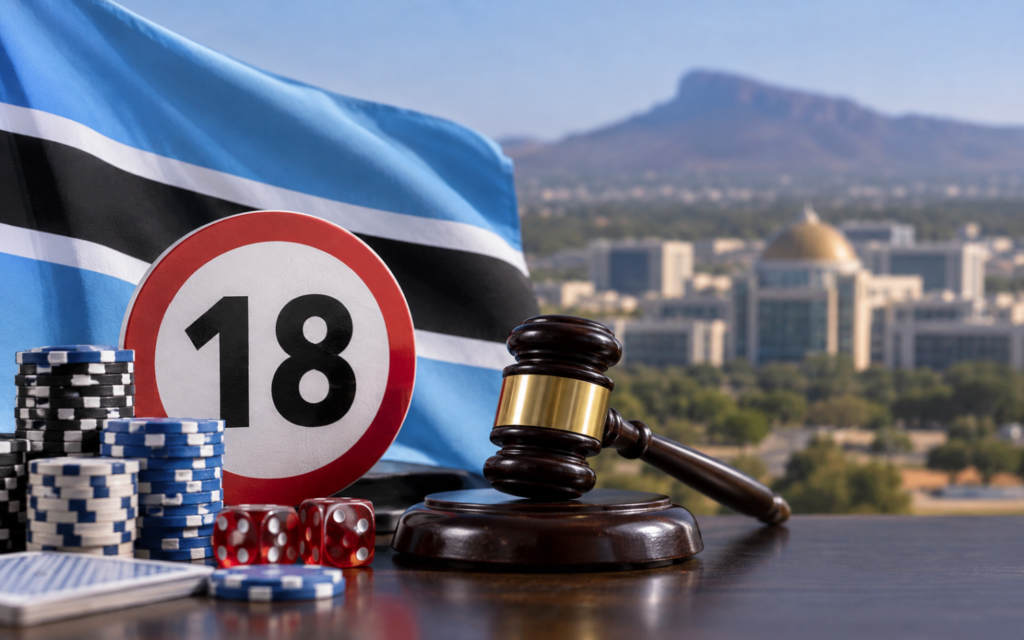
Botswana’s National Assembly has approved a major update to the country’s gambling laws, including a proposal to reduce the minimum legal gambling age from 21 to 18.
The Gambling (Amendment) Bill 2026 passed its third reading on 13 August after lawmakers completed committee-stage consideration. The changes are not yet in force, however, as the legislation still requires presidential assent and formal commencement through the Government Gazette.
Until those steps are completed, Botswana’s existing minimum gambling age of 21 remains unchanged.
MPs Debate Lower Gambling Age
The proposed reduction to 18 was among the most contested parts of the bill.
Some lawmakers argued that people aged between 18 and 20 could be more vulnerable to gambling-related harm and said the minimum age should remain at 21.
Supporters of the lower threshold pointed to Botswana’s wider legal framework, noting that citizens are generally treated as adults from the age of 18, including for voting and other civic rights.
Another argument in favour of the change was that excluding younger adults from the licensed market could push some towards illegal or unregulated gambling operators.
The debate comes as gambling participation continues to grow in Botswana, particularly through online betting platforms. The Gambling Authority has increased public awareness activity focused on legal gambling, responsible participation and protections for vulnerable players.
Illegal gambling is also a significant concern for regulators. Acting Gambling Authority chief executive Moruntshi Kemorwale has previously estimated that unlicensed gambling operations remove around P850 million from Botswana’s economy each year.
Bill Strengthens Compliance Requirements
The age change forms only one part of the broader Gambling (Amendment) Bill.
The legislation also introduces tighter compliance measures intended to align Botswana’s gambling framework more closely with the Financial Intelligence Act and international anti-money laundering standards.
The reforms expand requirements relating to beneficial ownership, customer identification, financial interests and suitability checks for gambling businesses and their stakeholders.
Regulatory approval would also be required when a person or company acquires a direct or indirect financial or controlling interest of at least 5% in a licensed gambling operator, unless another threshold is formally prescribed.
The measures are designed to give the Gambling Authority greater oversight of ownership structures and reduce the risk of gambling businesses being used for financial crime.
Monitoring and Penalties to Be Expanded
The bill also strengthens technical monitoring requirements across the regulated sector.
Most licensed gambling venues would be required to connect gambling machines and other relevant devices to the Gambling Authority’s central monitoring system.
Casino and bingo operators would instead need to operate approved monitoring systems capable of meeting regulatory requirements.
Penalties for certain offences would also become more severe. Breaches could result in fines of up to P100,000, imprisonment for up to five years, or both.
At the same time, the bill introduces procedural protections for licensees. Operators would have the right to make representations before the regulator suspends, revokes or refuses to renew a licence.
Responsible Gambling Remains a Priority
Responsible gambling continues to form an important part of Botswana’s regulatory agenda as participation shifts increasingly towards digital platforms.
The Gambling Authority already operates self-exclusion and third-party exclusion mechanisms designed to protect people showing signs of harmful gambling behaviour.
Authorities have also discussed stronger treatment services and greater use of technology to identify risky betting patterns before they develop into more serious gambling-related harm.
Botswana’s regulated gambling market has expanded in recent years through the licensing of bookmakers and online betting operators. At the same time, regulators are under growing pressure to tackle offshore and unlicensed platforms operating outside local safeguards.
With parliamentary approval secured, the Gambling (Amendment) Bill now awaits the remaining legal steps before implementation. The proposed reduction in the minimum gambling age from 21 to 18 will only take effect once the legislation receives assent and formally commences.