
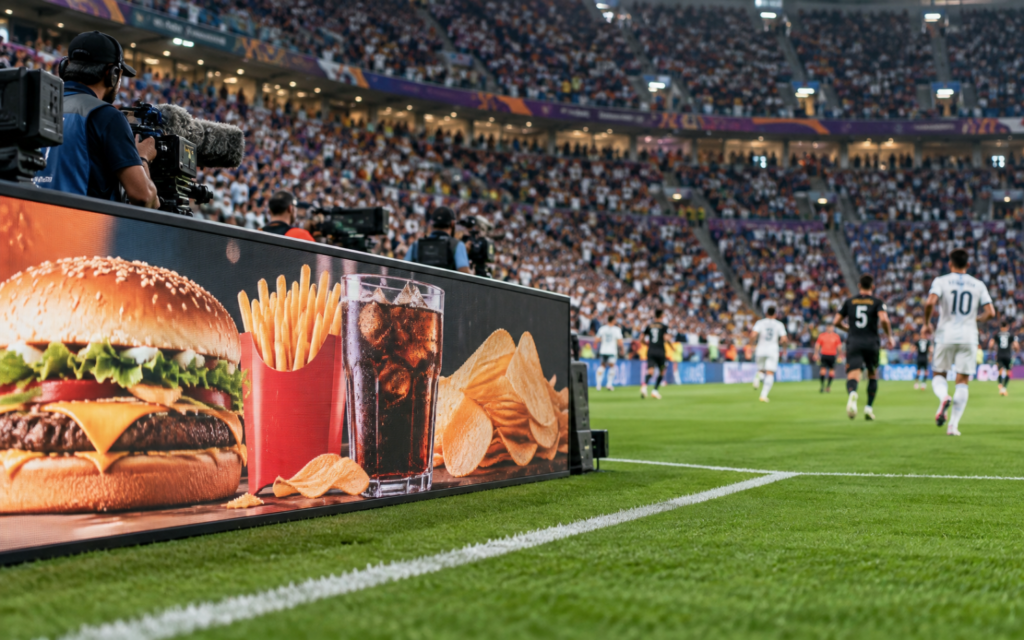
Television audiences watching the 2026 FIFA World Cup were exposed to more than 65,000 appearances of unhealthy food and drink advertising during live matches, according to research conducted by the universities of Bristol and Oxford.
Using an artificial intelligence tool, researchers examined advertising visible throughout all 104 matches held across the United States, Canada and Mexico. The analysis focused on branding displayed on pitchside boards and around stadiums during live play.
The study recorded 65,722 appearances of logos and products associated with foods and drinks classified by the UK government as high in fat, salt or sugar.
These advertisements were visible for a combined 28.1 hours, accounting for just over 16% of total playing time. Researchers estimated an average of 576 advertising appearances per match.
The analysis covered the international television feed, meaning the advertising was visible to audiences across countries broadcasting the tournament. It excluded promotions shown before matches, during half-time commercial breaks and throughout in-match hydration breaks.
Coca-Cola was the most frequently displayed brand, appearing 21,893 times. McDonald’s followed with 13,915 appearances, ahead of Powerade with 12,777 and Lay’s with 12,087.
All four brands are official FIFA partners. Powerade is owned by Coca-Cola, while Lay’s operates under the Walkers brand in the UK.
The researchers also examined other advertising categories considered potentially harmful. Unhealthy food and drink branding appeared approximately seven times more frequently than alcohol and prediction market advertising, 10 times more often than gambling promotions and nearly 25 times more often than cryptocurrency advertising.
FIFA Defends Commercial Partnerships as Researchers Raise Health Concerns
The findings have intensified scrutiny of the relationship between major sporting events and the promotion of unhealthy food and drink products, particularly among younger audiences.
Researchers warned that repeatedly associating such brands with football, excitement and national identity could increase their familiarity and encourage the normalisation of unhealthy consumption.
FIFA defended its commercial partnerships, explaining that most of its revenue is reinvested in football, including programmes supporting health and wellbeing.
The governing body also highlighted its partner governance and compliance requirements, alongside social impact initiatives such as Be Active, which promoted physical activity, inclusion and friendship throughout the tournament.
However, the researchers argued that the scale of advertising during the world’s largest football competition raises questions about the consistency of its health messaging.
Study co-author Dr Elisa Becker highlighted the contradiction between sport’s potential to improve public health and the extensive marketing of products associated with diet-related disease and childhood obesity.
International Advertising Exposes Gaps in UK Restrictions
The findings have also drawn attention to limitations in national advertising regulations.
The UK introduced restrictions in October 2025 prohibiting television advertising for certain unhealthy foods and drinks before 9pm. Products covered include burgers, chips, crisps and drinks containing added sugar.
However, advertising displayed on stadium boards during international sporting events falls outside the restrictions, allowing viewers to encounter promotions for these products during hours when conventional television advertisements are prohibited.
Greg Fell, president of the Association of Directors of Public Health, identified this regulatory gap as a reason for stronger international cooperation.
He argued that governments must coordinate their approaches to unhealthy food marketing because obesity is a global public health challenge. Fell also raised concerns about advertising aimed at children and drew comparisons with the marketing strategies previously used by the tobacco industry.
The debate comes as the UK government introduces changes to school meal standards intended to address childhood obesity. The measures include removing deep-fried foods from school menus and increasing the provision of fruit, vegetables, fibre and wholegrains.
According to NHS figures from 2024 cited in the report, 15% of children in the UK were classified as obese, while 26% were overweight.
The researchers concluded that international sporting organisations and policymakers should examine how commercial sponsorship arrangements influence exposure to unhealthy food marketing, particularly among children, and consider coordinated measures to address advertising that falls outside national restrictions.