
Everton’s renewed partnership with crypto casino Stake has increased pressure on the UK government to prevent gambling operators without a British licence from sponsoring domestic sports teams.
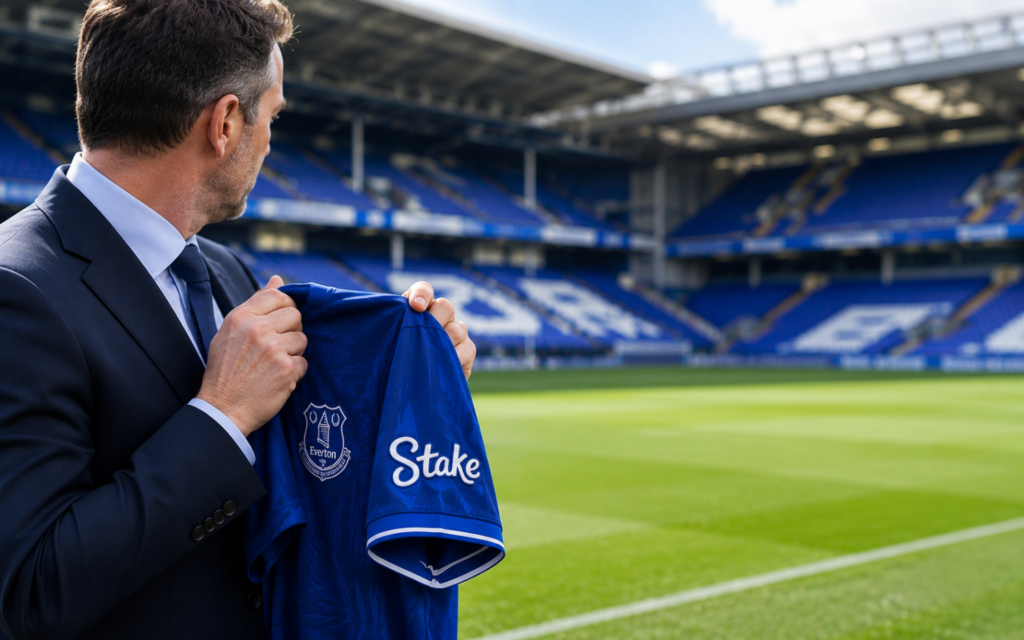
The Premier League club recently agreed a three-year arrangement that will move Stake’s branding from the front of Everton’s shirt to the sleeve from the 2026/27 season. The agreement was completed while the government was preparing a consultation on restricting sponsorships involving unlicensed operators.
The Department for Culture, Media and Sport initially indicated that its review would begin in spring 2026. However, the process was delayed, allowing clubs and offshore gambling businesses additional time to negotiate commercial agreements.
A consultation is now expected to examine how the existing rules could be tightened. The current legal framework does not automatically prevent an overseas gambling company from sponsoring a British club, provided it does not offer gambling services to consumers in Great Britain.
Stake maintains that it does not accept bets from UK customers. Nevertheless, the company’s continuing exposure through Everton has raised concerns about whether football sponsorship can direct supporters toward gambling platforms that are not regulated by the UK Gambling Commission.
The operator previously served British customers through a white-label partnership with TGP Europe. That arrangement ended after TGP agreed to close Stake.uk.com following a Gambling Commission investigation into the brand’s marketing.
The investigation concerned a widely circulated social media video that displayed Stake branding alongside an adult content creator outside Nottingham Trent University. The British-facing website stopped accepting new registrations and completed its closure in March 2025.
At the time, the Gambling Commission warned Everton and other clubs that their executives could face prosecution if they promoted an unlicensed gambling business that continued to transact with British consumers. Clubs were also instructed to conduct sufficient checks on geo-blocking measures, including whether restrictions could be bypassed through virtual private networks.
Despite Stake’s withdrawal from the regulated British market, its wider international partnership with Everton remained in place. The club confirmed on 30 June that Stake would become its official sleeve partner under a new multi-year agreement, with branding also appearing across Everton’s digital platforms and matchday assets.
The change coincides with the start of the Premier League’s voluntary restriction on front-of-shirt gambling sponsorships. Clubs agreed in 2023 to remove gambling companies from the central position on matchday shirts after the end of the 2025/26 campaign.
However, the Premier League measure does not cover shirt sleeves, training wear, pitchside advertising or other commercial placements. This has allowed operators to shift their branding to other prominent areas rather than leaving football sponsorship entirely.
Everton has selected financial services company CMC Markets as its new front-of-shirt sponsor for 2026/27, while Stake will retain a visible position on the sleeve. The club has also confirmed the arrangement on its newly released home kit.
Entain chief executive Stella David had urged ministers to act before new sponsorship contracts were finalised. She warned that the absence of government intervention could be interpreted by clubs as permission to continue signing agreements with operators outside the British licensing system.
Critics of such partnerships argue that unlicensed gambling businesses do not have to follow the same consumer protection, anti-money laundering and safer gambling requirements as UK-regulated companies. They also say offshore platforms can avoid contributing the taxes and regulatory fees paid by licensed operators.
The government has said it intends to consult on banning unlicensed gambling companies from sponsorship agreements across British sport. Any restrictions resulting from that process could affect existing contracts, although it remains unclear whether transitional periods would be offered.
Everton’s agreement with Stake has therefore become a central test case for the proposed reforms. It also demonstrates the limits of the Premier League’s front-of-shirt ban, which reduces the most prominent form of gambling advertising without removing betting and casino brands from club kits altogether.