
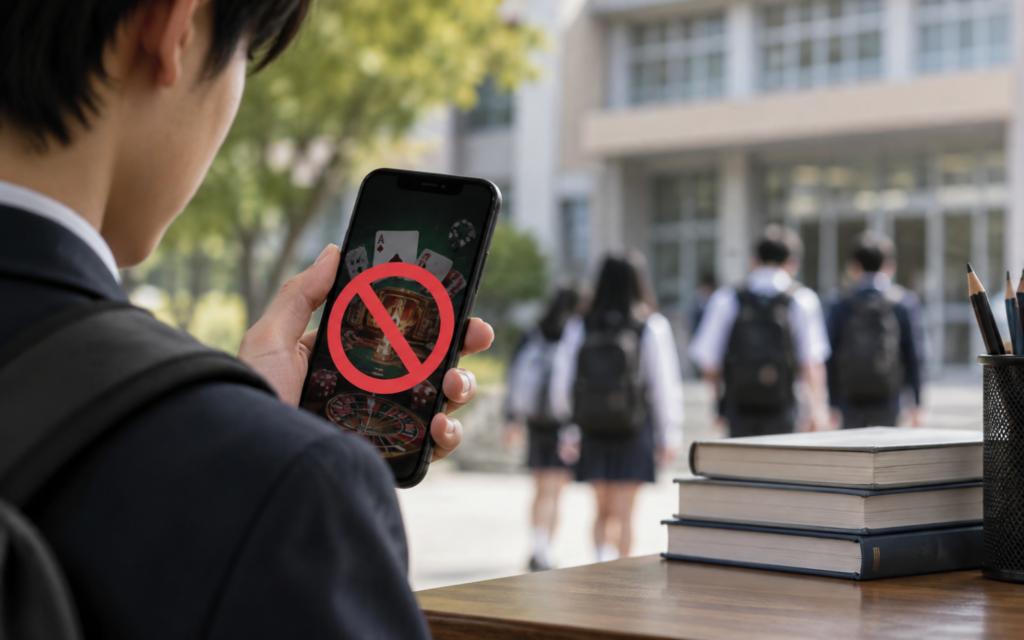
South Korea’s Gyeonggi Provincial Office of Education has joined forces with the country’s gambling regulator to strengthen efforts against youth gambling, with the programme combining prevention education, reduced smartphone use and structured offline activities.
The education authority signed a memorandum of understanding with the National Gambling Control Commission on 14 September at Seongho Middle School in Osan. The agreement establishes a formal cooperation framework focused on preventing gambling-related harm among young people and improving protection for students.
The commission, which operates under South Korea’s Prime Minister’s Office, is responsible for supervising gambling industries and monitoring illegal gambling activity. Under the agreement, the two organisations will coordinate policy, share prevention resources and specialist personnel, and work together on programmes that can be tested in schools before potentially being expanded nationwide.
A central part of the initiative will connect gambling prevention with Gyeonggi’s existing Phone Free-RAS education programme. RAS stands for reading, arts and sports, with schools encouraged to provide students with organised activities that reduce their dependence on smartphones and other digital devices.
The approach is intended to address online gambling exposure from two directions: limiting opportunities for students to access gambling content through smartphones while providing alternative activities during periods when they might otherwise spend time online. Korean reports said the programme will also use school-level data to improve prevention policies and support early intervention.
The agreement builds on gambling-prevention work already underway across Gyeonggi. In May, the education authority operated a province-wide Student Gambling Prevention Week, involving schools, education offices, police and other organisations. The initiative included prevention lessons, regional campaigns and online awareness activities.
Gyeonggi has also previously developed a broader student gambling response system involving prevention education, screening of students with gambling experience and referrals to specialist counselling services. Guidance materials for teachers and parents and a three-stage screening tool were also developed as part of that work.
Education superintendent An Min-seok said effective action requires close coordination between schools, which have direct knowledge of students and their environment, and organisations specialising in gambling prevention and treatment. He said the new partnership should result in practical policies rather than remaining a one-off agreement.
The National Gambling Control Commission has also made youth gambling a broader priority during 2026, including supporting the country’s third Youth Gambling Problem Prevention Week earlier this year.