
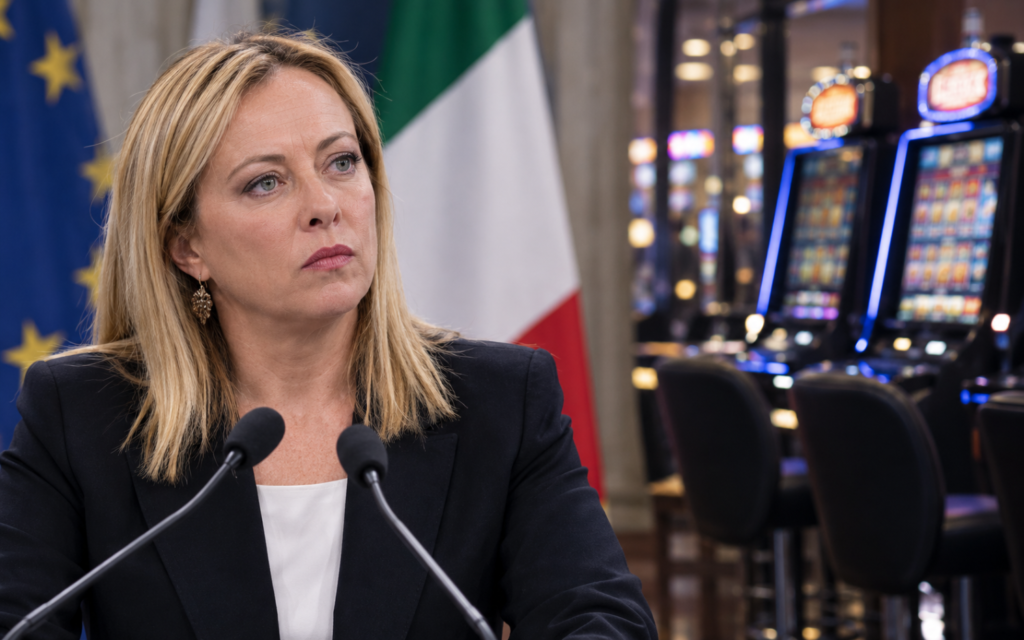
Italy’s long-running effort to overhaul its land-based gambling market has suffered another setback after Prime Minister Giorgia Meloni’s government declined to approve the latest compromise proposed for the country’s retail gambling reform.
The decision halts months of negotiations between Rome and Italy’s regional authorities over the long-awaited Reorganisation of Land-based Gambling Decree, legislation intended to replace the fragmented rules that currently govern betting shops, gaming halls and machine operations across the country. The reform is designed to establish a unified national licensing system while strengthening player protection standards and reducing illegal gambling activity.
According to the latest developments, ministers concluded that the draft agreement did not adequately resolve several outstanding issues, particularly those relating to financial compensation for regional governments. While consensus has largely been reached on the new licensing structure and nationwide operating standards, disagreements remain over how local administrations should be compensated for implementing the reforms and replacing existing concession arrangements.
The stalled decree is a key part of the Meloni administration’s broader gambling reform programme. The government has already completed the restructuring of Italy’s online gambling licensing regime, which came into force in late 2025, and has been attempting to bring the retail sector under a comparable national framework.
The proposed retail reforms include new concession tenders, harmonised rules for betting venues across Italy’s 20 regions, updated certification requirements for licensed operators and stronger responsible gambling measures. The framework would also introduce common standards covering venue locations, operating conditions and anti-money laundering controls, replacing the patchwork of regional regulations that has developed over the past decade.
A further element of the reform package is the government’s plan to revise gambling advertising laws. Sports Minister Andrea Abodi is preparing legislation to replace the 2018 Dignity Decree, which introduced a blanket ban on gambling advertising and sponsorships. The proposal remains under discussion alongside the retail gambling legislation.
Time is becoming increasingly important for the government. Officials are aiming to complete both the retail gambling decree and the advertising reforms before the end of August so they can be incorporated into Italy’s 2026 Budget and finalised ahead of the country entering its 2027 election cycle.
The delay also prolongs uncertainty for operators awaiting new concession tenders covering gaming machines, betting outlets and bingo halls. Under the planned reforms, the government hopes to modernise the retail sector, improve regulatory oversight, protect consumers more effectively and secure more stable tax revenues while limiting the growth of the illegal gambling market.