
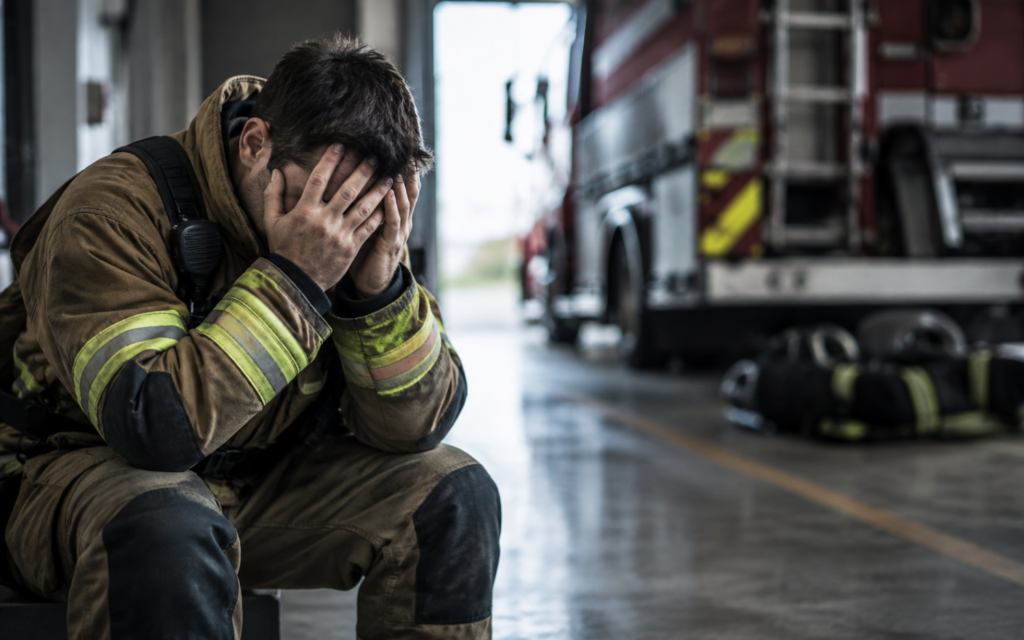
A new US study has identified unusually high levels of gambling-related harm among first responders, with firefighters emerging as the occupational group showing the greatest risk.
Kindbridge Research Institute released the report, Gambling among First Responders in the United States, at the start of Responsible Gaming Education Month. The research examined gambling behavior alongside mental health, occupational exposure and military experience among 507 active firefighters, police officers, emergency medical technicians, paramedics and rescue workers.
The project was funded through a grant from the Colorado Division of Gaming, part of the Colorado Department of Revenue. EPIC Global Solutions conducted the research in partnership with Kindbridge, with EPIC researchers Anca-Maria Gherghel and Anneke Stols authoring the report.
Among participants, 94.5% said they had gambled during the previous 12 months. Of those who had gambled, 44% met the study’s threshold for problem gambling, while another 39% were classified as being at risk of developing gambling problems.
Firefighters recorded the highest level of gambling harm within the sample. Around 49% met the problem-gambling threshold, compared with approximately 42% of police officers and 39% of emergency medical technicians. Researchers cautioned that some respondents held more than one first-responder role, limiting firm comparisons between occupations. Online sports betting was also reported as the most common gambling activity among participants.
Mental health emerged as another significant factor. Half of the respondents screened positive for possible symptoms associated with post-traumatic stress disorder, and greater PTSD symptom severity was strongly linked with higher gambling-risk scores. Military experience was also identified as an additional risk factor.
The findings add to earlier research suggesting that gambling problems can remain an overlooked issue within emergency-service workforces. A previous study of 566 Australian firefighters found that 12.3% showed some level of gambling-related problems, including 2.3% classified as problem gamblers and 10% considered at risk. That research also found links between gambling problems and poorer mental health and wellbeing.
The US study was partly inspired by the experience of New Jersey firefighter Greg Weber, who has publicly discussed his own gambling addiction and has worked with EPIC Global Solutions on gambling-harm education. According to the researchers, gambling can be highly normalized within first-responder environments despite the psychological pressures already associated with repeated trauma, unpredictable working conditions and high responsibility.
Kindbridge said the results demonstrate the need for prevention, education and screening programs specifically designed for first responders rather than relying solely on general responsible-gambling messaging. The institute argues that gambling risk should be considered alongside established workplace concerns such as PTSD, burnout and other behavioral-health problems.