

The future outlook for California card rooms is increasingly uncertain after the state finalised significant rule changes. Last week, California approved two new sets of regulations affecting blackjack-style games and the rotation of player-dealers.
The rule changes, approved by California’s Office of Administrative Law (OAL), will take effect on 1 April. Card rooms will have until 31 May to submit new compliance plans. The new regulations substantially alter gameplay mechanics for blackjack-style games and tighten the parameters for player-dealers, a long-running point of conflict with tribal operators.
Big changes to California player-dealer rules
The revisions target third-party providers of proposition players, or TPPPs, and formalise stricter rotation and visibility requirements.
Under the new framework:
The player-dealer must remain seated at the table at all times, and the position must be offered to all players before every hand. The offer must be visible to surveillance cameras.
Each table must display a notice stating: “Any player can assume the player-dealer position when it is offered. The player that assumes the player-dealer position cannot win or lose more than the amount they wager.”
The role of player-dealer must rotate to at least two players other than the TPPP every 40 minutes or the game must end.
If the TPPP is serving as player-dealer, the next rotation must be to another player.
TPPPs may accept and settle wagers only when serving as player-dealer.
Only one TPPP will be permitted per table.
These provisions significantly constrain how TPPPs operate, and that constraint appears deliberate.
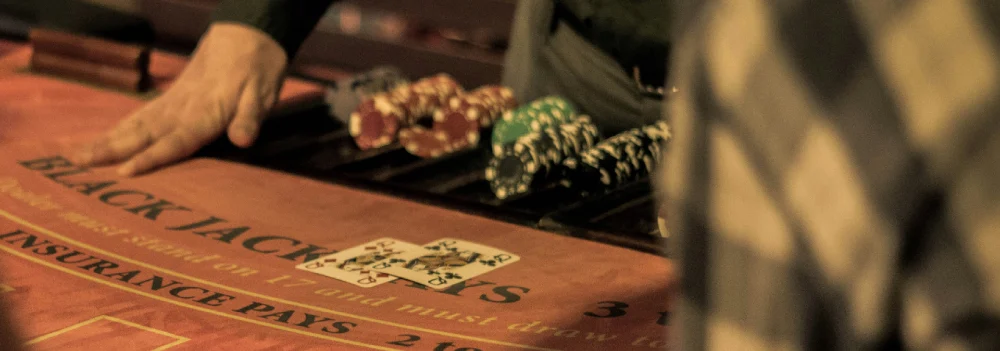
Changes to blackjack-style games lamented
The regulations also reshape blackjack-style games in ways that many card rooms argue will undermine their viability.
Games will no longer be allowed to include a “bust” feature where exceeding 21 results in an automatic loss. Instead, outcomes must be determined solely by whether a player’s total is closer to a designated target point count than the player-dealer’s hand.
The target point cannot be 21.
With 21 removed as the benchmark, neither players nor dealers will automatically win with that total. In the event of a tie, players will win instead of the traditional push outcome.
No games may use the words “21” or “blackjack” going forward.
At an October protest in downtown Los Angeles, the blackjack changes were a central concern. Compton Mayor Emma Sharif said cities across Los Angeles County depend on blackjack-style revenue to sustain municipal budgets.
“Every time they want to shut down the place, they want to take blackjack-style games away; for me, I cannot handle that,” said Nary Chin, a dealer at Gardens Casino. “Without our card room, I don’t think I would be here today.”
Contentious California card room process
Card rooms opposed the changes throughout a prolonged and often tense rulemaking process. They argue the adjustments are politically driven.
The process began informally in 2023 and continued throughout 2024. Two public hearings were held last May, and the state received 1,764 comments across the two regulatory packages. Despite that volume of feedback, the California Department of Justice indicated the comments did not materially affect the final outcome.
“After careful review and consideration of the comments, DOJ did not make any substantive changes to the proposed regulations,” the department said.
The OAL did not request further hearings or amendments. The Attorney General’s Office referred inquiries back to its formal release.

California card room lobby ‘not ready to just give up’
The California Gaming Association (CGA), representing card rooms, characterised the changes as catastrophic.
“The Bureau of Gambling Control advanced the regulations without any showing of legal necessity, or any public harm or safety risk caused by these popular games,” the association said. It also argued that regulators failed to provide adequate notice or meaningful public engagement.
CGA President Kyle Kirkland described the shift as “devastating” and a “dramatic, hard, 180-degree pivot” in statutory interpretation. He stated that card rooms are not prepared to cease operations by 1 April and suggested that legal action is likely, though specific strategies have not been disclosed.
Tribes, card rooms point fingers over rules
Tensions between tribes and card rooms have intensified. In October, several major card rooms staged a protest outside Attorney General Rob Bonta’s Los Angeles office, accusing him of aligning with tribal interests.
The Bureau of Gambling Control stated in its rulemaking notices that the changes are intended to strengthen compliance with existing law. The Bureau argued that the revisions will ensure prohibited forms of gambling are not offered, referencing Penal Code section 330 and constitutional restrictions.
Card rooms contend that tribes are driving the regulatory shift. Both sectors are active politically. Tribal interests have outspent card rooms roughly six to one in state races since 2014, though card rooms remain significant lobbying participants. Attorney General Bonta has received campaign contributions from both sectors.
The California Nations Indian Gaming Association welcomed the approvals. Chairman James Siva called the move “an important step” in protecting tribal sovereignty.
“The regulations further clarify that games and practices employed by commercial card rooms are indeed prohibited under California law,” Siva stated. “Running a business contrary to that law is an illicit business, period.”
How did we get here?
California tribes secured exclusivity for Class III, house-banked gaming through Proposition 1A in 2000. As a result, card rooms are limited to peer-to-peer formats and must differentiate their offerings from Las Vegas-style casinos.
The revenue disparity between the two sectors is substantial. Tribal casinos generated more than $12 billion in gross gaming revenue in fiscal year 2024, while card rooms’ economic impact is roughly half that figure according to prior studies.
Over time, card rooms adapted by introducing game variants and partnering with TPPPs. In peer-to-peer formats, players often lack the capital or inclination to bank games themselves, and state law requires periodic dealer rotation.
TPPPs, licensed by the state, bankroll player-dealers and facilitate continuous gameplay.
Tribal lawsuit dismissed, but rule changes similar
Tribes have challenged TPPPs and blackjack-style games for years. Passage of SB 549 in 2024 created a one-time opportunity for tribes to sue card rooms over these issues. A lawsuit was filed in January 2025 but dismissed by Sacramento County Superior Court. The decision has been appealed.
Despite that dismissal, the regulatory process continued in parallel. Many of the finalised rule changes reflect long-standing tribal arguments.
Enforcement actions ramping up across California
The card room regulations follow a series of enforcement and policy moves under Attorney General Bonta.
Earlier this year, the DOJ seized 26 “Racing on Demand” machines from Santa Anita Park, prompting litigation. The track alleges it consulted both the DOJ and the California Horse Racing Board before deploying the machines.
Previously, the Attorney General issued a legal opinion declaring daily fantasy sports illegal under state law. A sweepstakes ban was enacted in October. In 2022, voters rejected Proposition 27, an online sports betting initiative backed by commercial operators.
Collectively, these developments illustrate an assertive regulatory environment. For card rooms, the immediate focus now shifts to compliance deadlines and potential legal challenge before the 1 April effective date.