
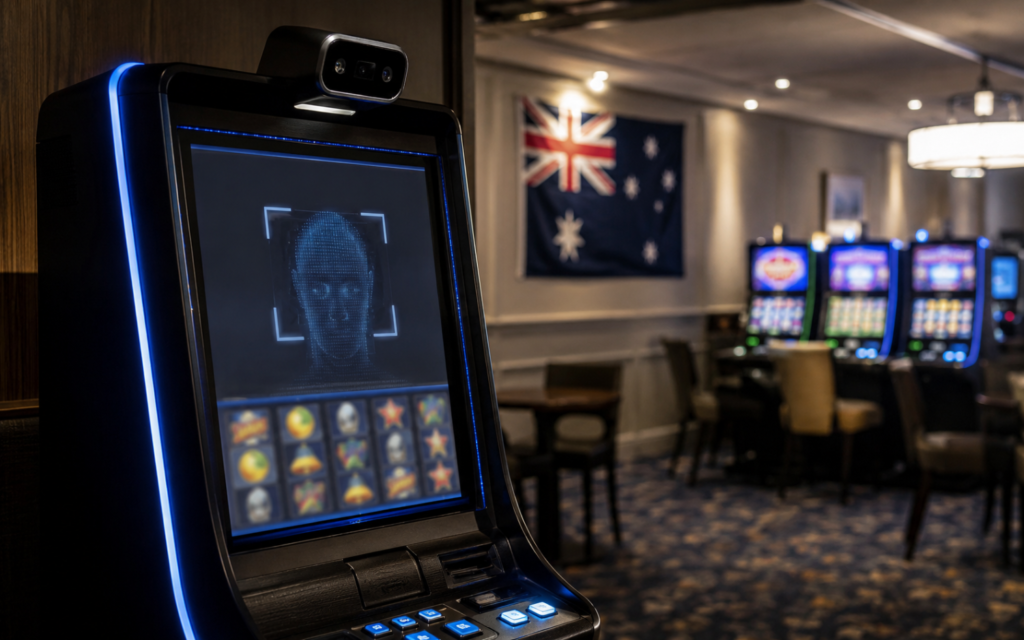
The New South Wales government has announced a broad package of gambling reforms that will introduce statewide self-exclusion, mandatory facial recognition in gaming venues and tighter controls on advertising and direct marketing.
The NSW Gaming Reform package, unveiled on 25 August, is the latest stage of the Minns government’s gambling policy programme and draws on recommendations from the Independent Panel for Gaming Reform, the NSW Crime Commission’s work on money laundering and wider consultation with industry, harm-reduction specialists and law enforcement.
The government has allocated AU$95.2 million over four years to implement the reforms. Funding will come from the remaining money in the state’s AU$100 million gambling harm minimisation fund and higher licence fees for hotels and clubs operating gaming machines. A further AU$20 million will be directed to the Responsible Gambling Fund over the next two years.
The package follows data showing that gambling harm remains a significant issue in the state. The 2024 NSW Gambling Survey found that 3.1% of adults were classified as experiencing moderate-risk gambling and 0.9% as high-risk. Overall, 4.0% fell into the combined moderate-to-high-risk category.
Statewide exclusions backed by facial recognition
One of the central changes is the creation of a single statewide exclusion register covering every NSW hotel and club with gaming machines.
The current system allows people to exclude themselves from individual venues or gaming areas, but enforcement largely depends on staff at each location. Under the new framework, an exclusion will apply across participating venues throughout the state.
Mandatory facial recognition technology will be installed at gaming-room entrances alongside the register from 2028. The technology is intended to identify excluded customers and alert venues when they attempt to enter gaming areas.
The government said the system would also support police efforts to prevent gaming machines being used for money laundering and other criminal activity. A third-party exclusion mechanism will additionally allow action to be initiated for people considered at risk, extending intervention beyond voluntary self-exclusion.
NSW targets reduction in poker machine numbers
The reforms will also accelerate reductions in the number of poker machines operating across NSW.
There are currently around 87,000 machines across approximately 2,100 hotels and clubs. When gaming machine entitlements are traded, the forfeiture rate will rise from one in three to one in two, meaning one entitlement will be permanently removed for every two transferred.
A new “sinking cap” will lower the statewide limit as entitlements disappear from circulation. Existing exemptions that allow some transfers without forfeiture will also be tightened, while venues will be able to voluntarily surrender entitlements.
The changes build on earlier measures that ended longstanding exemptions allowing hundreds of venues to operate machines during normal shutdown hours. From 1 April 2026, affected venues became subject to the standard 4am-to-10am gaming-machine shutdown period.
Infrastructure prepared for account-based gaming
NSW will also begin upgrading infrastructure needed for possible wider use of account-based gaming.
Under such a system, customers use registered accounts rather than playing anonymously. However, the government said a large share of the existing machine network still relies on older technology.
The Centralised Monitoring System will therefore be upgraded over the next two years. The government said the upgraded infrastructure would allow venues to introduce account-based play in the future, while developments since previous cashless-gaming trials mean some systems could deliver anti-money-laundering and harm-reduction benefits without necessarily eliminating cash payments.
VIP schemes and government-property advertising face bans
Marketing restrictions form another major part of the package.
Gaming-related VIP programmes will be prohibited, while gambling advertising will be banned across NSW government and council-owned assets. Betting companies will also be prevented from contacting customers through calls, emails or text messages unless they have obtained explicit consent in advance.
New transparency rules are planned for gambling promotions involving affiliates and social media influencers, alongside restrictions on commissions linked to products considered higher risk.
The government will also develop a dedicated NSW strategy to reduce online gambling harm and strengthen enforcement against illegal operators. The plans include new offences, increased penalties and expanded regulatory powers.
Gaming and Racing Minister David Harris said the reforms were designed to combine technological safeguards, stronger exclusions and tighter regulation while allowing the hospitality and gaming sector time to adapt.
The government also intends to help pubs and clubs expand alternative revenue streams such as food, entertainment and live events, reducing their dependence on gaming-machine income.
While facial recognition and the statewide exclusion register are scheduled for 2028 and the monitoring-system upgrade has a two-year timeframe, a complete legislative timetable for every element of the reform package has not yet been announced.