
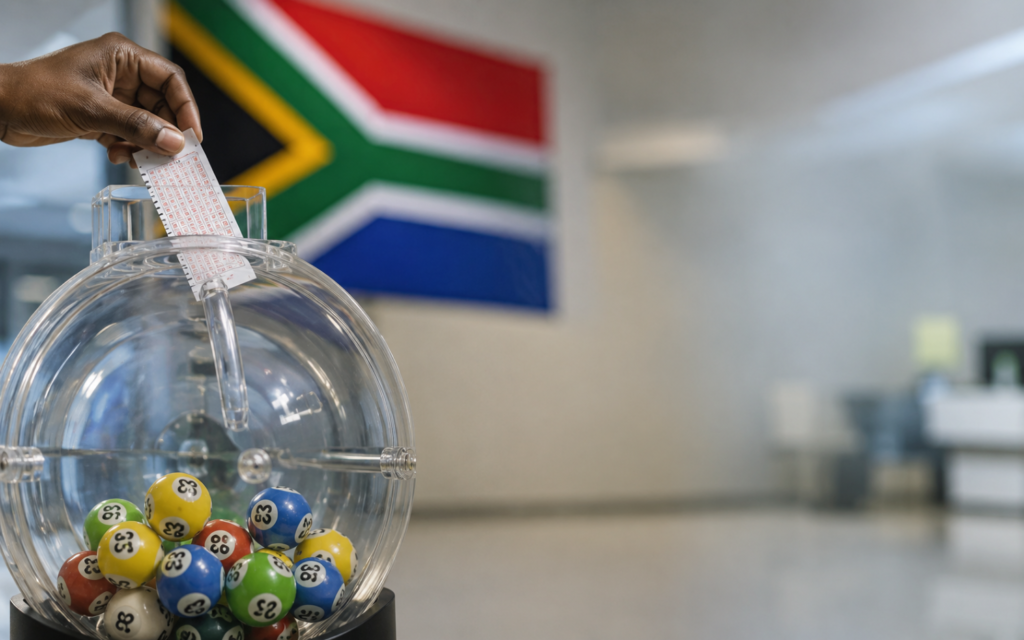
Sizekhaya Holdings has officially assumed control of South Africa’s National Lottery, taking over operations under an eight-year licence estimated to generate around R180 billion ($10.9 billion) in ticket sales. However, despite the operational handover, the controversial licence award remains the subject of ongoing court proceedings.
The company replaced Ithuba Holdings on 1 June, ending the latter’s 11-year tenure as lottery operator and marking the first change in leadership since 2015. The transition introduced several immediate changes, including jackpots of up to R130 million, the return of live lottery draws on e.tv and the rollout of more than 5,500 retail lottery terminals across the country.
The licence, issued under South Africa’s Lotteries Act, is expected to run until 2034. Around 34% of lottery revenue will continue to be directed to the National Lottery Distribution Trust Fund, which finances charitable organisations, sports initiatives, arts programmes and community projects. Since the lottery launched in 2000, the fund has distributed more than R31 billion to public causes.
Sizekhaya is chaired by businessman Moses Tembe, with AmaZulu FC owner Sandile Zungu also playing a leading role in the consortium. Goldrush Holdings owns a 40% stake in the business, while the state-backed National Empowerment Fund holds 20%. Bellamont Gaming, a Tembe-linked company, owns approximately 7%, and the lottery platform is supplied by Chinese technology provider Genlot.
The licence award has sparked criticism from opposition parties and investigative journalists, who have questioned Bellamont Gaming’s ownership structure because of its links to relatives of South African Deputy President Paul Mashatile. Reports also highlighted that Bellamont was incorporated only months before the bidding process, while Sizekhaya itself was established shortly before the application deadline.
Both the Democratic Alliance (DA) and the Economic Freedom Fighters (EFF) have called for closer scrutiny of the procurement process. The EFF has alleged that the bidding process involved political influence and conflicts of interest, while the DA argues that the government’s due diligence failed to identify potential concerns surrounding the consortium’s ownership.
Trade, Industry and Competition Minister Parks Tau has defended the selection, maintaining that Sizekhaya submitted the strongest overall bid. Company representatives have also welcomed public scrutiny, insisting they are prepared to address questions surrounding the consortium.
Although the National Lottery is now operating under its new licence, the legal dispute is far from over. Ithuba Holdings and rival bidder Lekalinga continue to challenge the award before the North Gauteng High Court in Pretoria, while the EFF has also applied to join the proceedings. The case is expected to be heard later this year and could ultimately determine whether the licence award stands.