
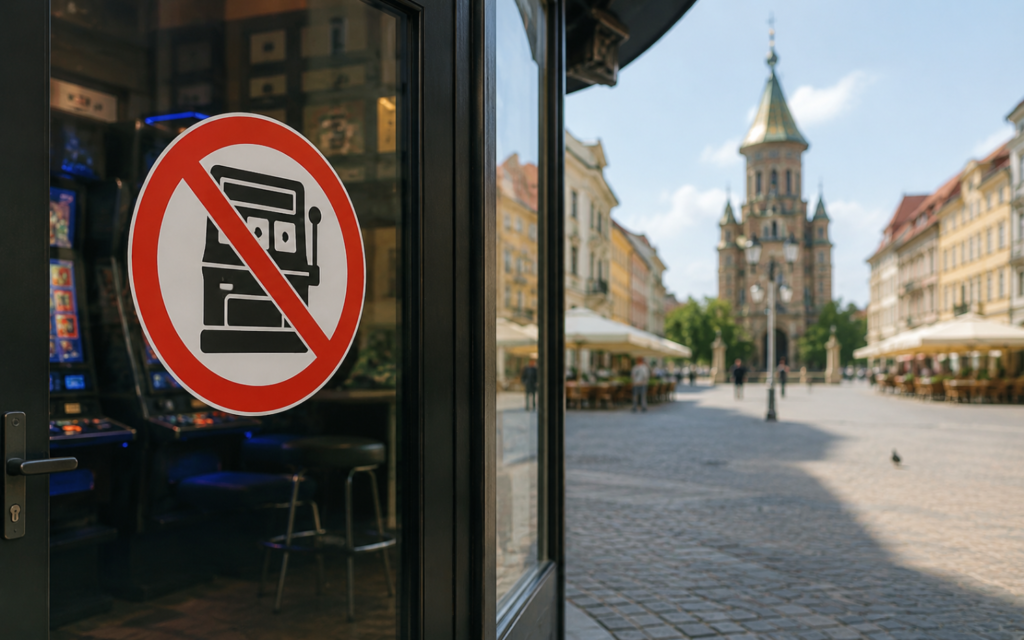
Timișoara has approved a citywide ban on gambling halls, preventing new venues from receiving local authorisation and putting the city’s existing gaming locations on a path towards closure by 2027.
The Romanian city’s Local Council adopted the measure unanimously on 25 August. Mayor Dominic Fritz confirmed that gambling halls already operating in Timișoara will not be forced to close immediately, but they will be unable to continue once their existing authorisations expire. Local reports say the remaining venues should disappear progressively, with the process expected to be completed during 2027.
An exception has been retained for lottery activities operated by the Romanian National Lottery, which will remain permitted in the city. In spring 2026, Timișoara had 173 locations authorised by Romania’s National Gambling Office (ONJN) to conduct gambling activities.
The final prohibition represents a tougher approach than an earlier proposal considered by the municipality. Local authorities had initially examined allowing gambling businesses to operate only within a restricted part of the Freidorf district, including an area around Sulina Street. That proposal faced opposition from residents and petitions against concentrating gambling venues near residential areas, prompting the administration to move instead towards a complete ban.
Timișoara’s decision was enabled by Romania’s wider gambling reforms introduced earlier in 2026. Government Emergency Ordinance 7/2026 gave municipal councils explicit authority to determine whether gambling activities can operate within their administrative territory. Physical gambling businesses must now obtain a local operating permit in addition to their national gambling licence and operating authorisation.
Under the new framework, councils that choose to permit gambling can establish their own operating conditions, permitted zones and annual local fees. They can also reject gambling activity altogether, which is the option now chosen by Timișoara.
The move adds to a broader tightening of Romania’s retail gambling market. In 2024, national legislation prohibited slot-machine halls in communities with fewer than 15,000 residents, while further regulatory and tax measures have increased pressure on land-based operators. The number of slot machines operating nationally has subsequently fallen sharply, from around 80,000 to approximately 36,000, according to industry estimates reported earlier this year.
Timișoara is not alone in using the new municipal powers. Ploiești’s Local Council also voted unanimously in July to prohibit gambling activities, although existing machines there can continue operating until their current authorisations expire.