
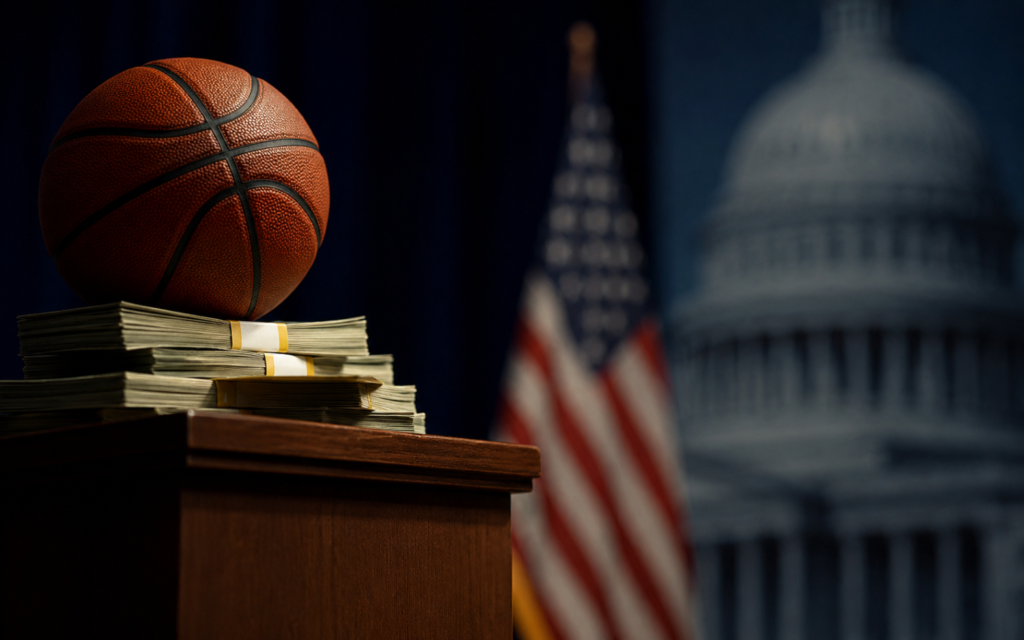
Major sportsbook operators and gambling-backed political groups are increasing their spending across U.S. state elections as lawmakers intensify scrutiny of sports betting and prediction markets.
The industry’s growing political activity comes at a time when regulators and lawmakers are debating issues such as sportsbook taxes, advertising restrictions, prop bets, and the rise of prediction market platforms like Kalshi and Polymarket.
Several states have recently become battlegrounds over how gambling products should be regulated. In Illinois, industry-backed political organizations reportedly spent heavily during legislative races after lawmakers approved tax hikes targeting sportsbooks. One candidate claimed nearly $200,000 was spent on attack ads against him ahead of a primary election.
Ohio also emerged as a flashpoint after lawmakers introduced legislation in April that sought to eliminate online sports betting statewide. Around the same period, the American Conservative Fund reportedly spent about $1m supporting selected Republican primary candidates.
Political spending tied to gambling interests has spread across other states as well.
In Alabama, local organizations called for investigations into gambling-related campaign funding and demanded greater transparency around political donations connected to sportsbook operators.
New York saw controversy surrounding a state assembly race after a PAC supported by DraftKings and FanDuel funded negative advertising targeting a candidate.
Pennsylvania and Georgia have also attracted major industry spending. In Pennsylvania, gambling interests reportedly invested more than $8m backing candidates opposed to raising sportsbook taxes. Meanwhile, gambling-linked organizations in Georgia spent over $10m during legislative races following another unsuccessful attempt to legalize sports betting in the state.
Texas has become another major target. Reports indicate the American Conservative Fund transferred roughly $3.5m into the Texas Conservative Fund ahead of the 2026 election cycle.
The political push reflects a broader shift in the gambling industry’s priorities. Over the last decade, operators largely focused on expanding legalization across the United States. Now, the debate is moving toward how betting markets should operate and how aggressively states should regulate them.
Prediction markets are becoming a particularly contentious issue. Companies such as Kalshi argue their products are federally regulated financial contracts rather than gambling products, while many state regulators and gambling industry groups believe the platforms function similarly to sportsbooks.
At the same time, concerns around integrity and consumer protection continue to grow. Critics have warned that prop betting and highly gamified wagering products may encourage excessive betting behavior, especially among younger audiences.
DraftKings CEO Jason Robins recently acknowledged the industry’s evolving political strategy during the company’s first-quarter earnings call.
“We have a super PAC that we formed and are spending in various states,” Robins said. “We’re going to try that strategy out for this election cycle, see how it goes, and then assess whether it’s something that we want to continue doing in future years.”
While prediction markets are increasingly viewed as a possible long-term growth opportunity for operators, traditional sports betting remains the industry’s core business for now, and companies appear determined to defend it as political and regulatory pressure increases across the country.