
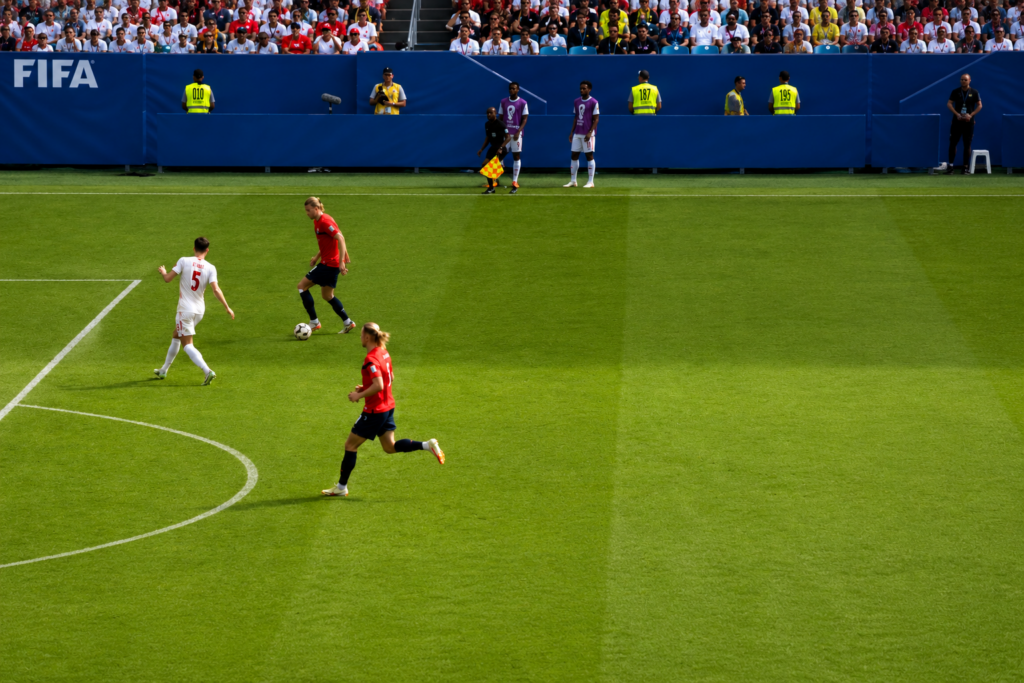
England reached the World Cup semi-finals with a 2-1 victory, but the scoreline does not fully explain what happened on the pitch. Norway were not simply outplayed by a stronger team. They lost control of a match that was in their hands and paid for several moments in which the right decision was not made.
The clearest example came while Norway were still leading. They broke through England’s midfield and had the chance to turn a dangerous attack into a second goal. Erling Haaland moved into space and was ready for the final pass, but the ball never reached him. The attack slowed down, England recovered its shape and the opportunity disappeared. At 2-0, the entire match would have changed. England would have been forced to take more risks, while Norway could have played on the counter with far more space.
That missed chance became even more important after England equalised. Norway had spent much of the first half keeping the game under control, but one lapse was enough to erase their advantage. Instead of going into the break with a comfortable lead, they returned to the dressing room level and with the momentum already shifting.
The decision involving Haaland also left Norway frustrated. He was penalised during an attacking move that ended with the ball in the net, although the contact appeared minor and had little influence on the episode. Haaland was treated as the offender, but the situation looked more like ordinary physical contact than a clear foul. The goal was disallowed, and Norway lost another chance to create separation on the scoreboard.
Then came the strangest incident of the match. During the build-up to England’s equaliser, the flight of the ball appeared to change unexpectedly. Norway’s players believed it had touched an overhead camera cable and expected play to be stopped. That never happened. The attack continued and England scored seconds later.
The problem was not only the decision itself. Several Norwegian players hesitated because they expected a whistle. England did not. They kept playing, attacked the space that opened up and punished the confusion. Even if the officials believed there had been no contact with the cable, Norway’s reaction was costly. In a knockout match, stopping before the referee stops the game is always dangerous.
Haaland will inevitably receive criticism because Norway failed to score again, but placing the defeat on him would be unfair. He made runs, occupied England’s defenders and repeatedly created space for the players around him. The larger problem was that Norway did not use those movements well enough. The final pass often arrived late, went to the wrong player or never came at all.
England deserve credit for staying in the match and taking their chances, but they did not dominate Norway. They survived the periods in which they were vulnerable, remained patient and waited for mistakes. Norway provided them with enough.
That is why this felt less like a great English victory and more like a Norwegian collapse. One missed pass, one disputed foul, one unusual cable incident and several seconds of hesitation were enough to turn a possible semi-final place into elimination.