
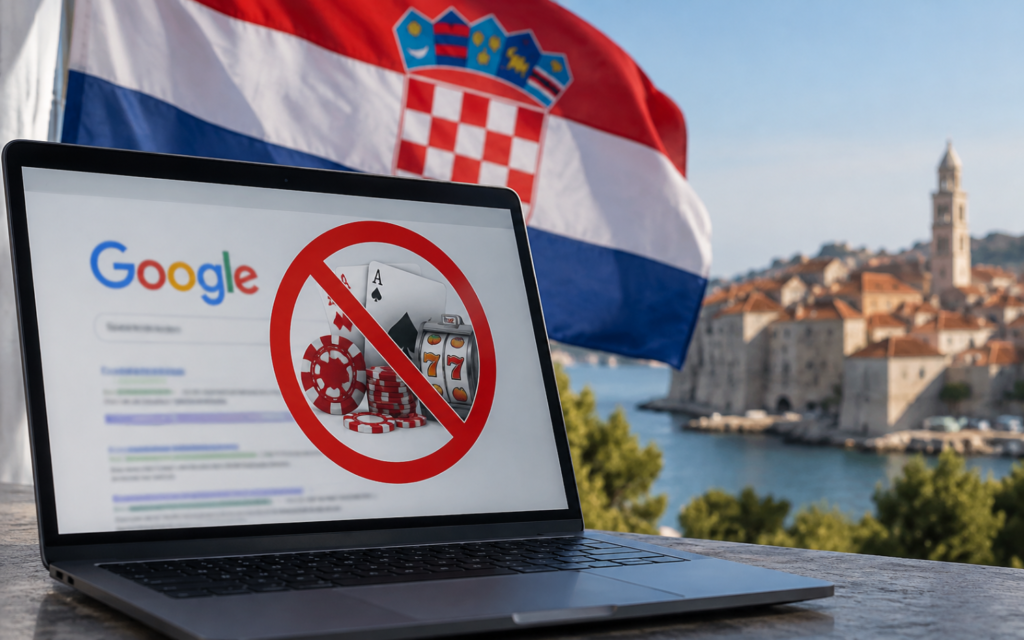
Google will tighten its gambling advertising rules in Croatia from 7 October 2026, ending Google Ads access for businesses promoting third-party online gambling services to Croatian users.
Under the updated country-specific policy, Google will prohibit advertising of online gambling-promoting content targeting Croatia. Existing certifications held by advertisers in that category will be revoked, while Google will stop accepting new certification applications.
The change is particularly significant for gambling affiliates, comparison websites and media businesses that use paid Google advertising to send customers to betting and gaming operators.
Google’s notice makes an important distinction between gambling operators and promotional intermediaries. The company states that the October update will not affect the promotion of online gambling itself. Its wider gambling policy defines gambling-promoting content as material that directly encourages participation in gambling or requires authorisation under local legislation.
The move arrives after Croatia introduced substantially tougher gambling marketing restrictions. Amendments to the country’s Gambling Act prohibit gambling advertising online, on television and on radio between 6am and 11pm. Gambling advertising is also banned in printed media and on publicly visible surfaces such as billboards.
Electronic publications are prohibited from including links that direct users to gambling operators. Promotions based on bonuses, free spins and similar incentives are generally prohibited outside operators’ own websites, while permitted gambling advertising must include warnings about addiction risks and the ban on participation by minors. Certain low-risk lottery products are exempt from parts of the restrictions.
Croatian law has also tightened the use of personalities in gambling marketing. Celebrities and other high-profile media figures cannot appear in gambling advertising across online, broadcast, print and publicly visible media, while social-media creators are prohibited from promoting gambling or livestreaming gambling activity. Sponsorship remains possible, but operators are limited largely to displaying their company name, logo and identifiable brand elements without messaging that encourages gambling.
Google has presented its Croatian policy update as a separate decision rather than a direct implementation of those legislative changes. However, the restrictions will further narrow the advertising channels available to gambling affiliates operating in the country.
The broader regulatory environment has also generated questions over the Croatian Football Federation’s relationship with US prediction-market operator Kalshi. In June, the federation announced Kalshi as a partner for its 2026 FIFA World Cup campaign, alongside a separate agreement making Croatia captain Luka Modrić one of the company’s featured global ambassadors. Kalshi branding was scheduled to appear across official federation digital properties and advertising during the tournament.
The partnership has attracted scrutiny because prediction markets occupy a less clearly defined regulatory position in Croatia than conventional licensed gambling products. That distinction has raised questions over how the country’s newly strengthened gambling advertising rules should apply to promotions involving prediction-market platforms.