
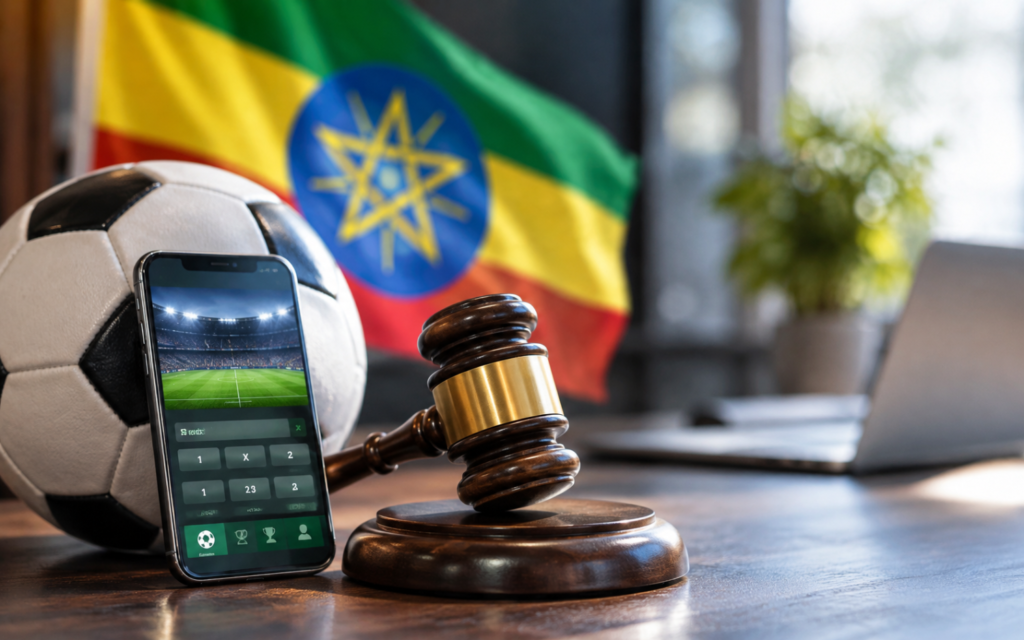
Ethiopia is preparing to restore sports betting and digital lottery operations under a stricter regulatory framework after a draft audit identified an estimated Br27.5 billion shortfall in payments owed to the state.
The planned overhaul follows the nationwide shutdown of licensed sports betting in December 2025, when the Ethiopian Lottery Service (ELS) revoked all operating licences amid investigations into alleged financial and regulatory breaches.
No sportsbook currently holds a valid Ethiopian licence, and authorities have yet to announce an application process or a date for reopening the regulated market.
Audit exposes major payment shortfall
The draft audit examined activity in the betting and lottery sector before the December shutdown and found that operators processed approximately Br199 billion in transactions.
Around Br30 billion in commissions was expected to be paid to the government, but only Br3.6 billion was reportedly collected. The wider Br27.5 billion shortfall also covers other outstanding obligations, including penalties, licence renewal costs and registration charges.
Capital Ethiopia reported that Br8.64 billion, around 32% of the uncollected amount, was linked to Dash Betting, while approximately Br19 billion was associated with other operators.
The findings remain provisional because the complete audit has not yet been released publicly, and some of the reported figures do not reconcile exactly across individual categories.
ELS chief executive Beza Girma said authorities intend to pursue legal measures to recover liabilities confirmed through the completed audit.
The regulator is also developing a unified digital monitoring system designed to record operators’ transactions and track their financial and legal obligations. The technology is expected to form a central part of the new regulatory structure if betting is allowed to resume.
Crackdown followed December shutdown
ELS initially suspended 22 sports betting operators on 4 December 2025 while authorities investigated alleged regulatory breaches and illicit financial activity.
Eleven days later, the regulator revoked all sports betting licences nationwide and ordered both online and retail betting activity to stop. Banks and payment providers were also instructed to halt transactions connected to betting businesses.
Enforcement continued during 2026. In August, Ethiopia’s Government Communication Service announced action against 38 betting enterprises accused of concealing customer information, avoiding taxes, hiding revenue and facilitating illicit financial flows.
The government said owners had been taken into custody and company bank accounts were frozen, although it did not publicly identify the companies involved or disclose the eventual outcome of individual cases.
Authorities have maintained that the December shutdown did not eliminate illegal betting activity. ELS reiterated in July that no company was authorised to provide sports betting in the country and warned consumers against depositing money through unlicensed websites, applications, agents or social-media channels.
Legal dispute tests regulatory process
The crackdown has also produced a legal challenge involving operator Hulu Sport.
Ethiopia’s Federal High Court overturned a regulatory decision against the company after determining that Hulu Sport had not been given an adequate opportunity to respond to the accusations against it.
The regulator subsequently appealed, and a temporary stay was granted while the case moved towards review by the Court of Cassation.
The dispute focuses on the procedure used by the regulator rather than resolving the broader allegations involving the betting industry.
Government settles dispute over oversight
Ethiopia has also been debating which public authority should control sports betting.
During parliamentary consideration of new sports legislation, Girma opposed proposals that could have given the Ministry of Culture and Sports a role in determining how betting operations should function.
She maintained that licensing and supervision fell under the Ministry of Revenues, which had delegated those responsibilities to ELS until more detailed legislation could be introduced.
The disputed provision was ultimately removed from the Federal Sport Development and Management Proclamation No. 1413/2026, which was gazetted on 3 July.
The legislation instead created a Federal Sports Development Fund without specifically identifying betting proceeds as a source of revenue. Funding arrangements are expected to be established separately through regulations issued by the Council of Ministers.
Ethiopia is therefore moving towards a possible return of regulated sports betting, but the market remains closed for now. ELS has not published new licensing conditions, an application timetable or a confirmed launch date, leaving operators unable to legally resume betting activities.