
Audi has reaffirmed its support for turbocharged engines in Formula 1 as discussions continue over the sport’s engine regulations beyond 2030.
FIA president Mohammed Ben Sulayem has been advocating for a return to naturally aspirated V8 engines powered by sustainable fuels and featuring only a limited hybrid component. He has indicated that such power units could arrive as early as 2030, with 2031 considered the latest target.
However, Audi believes turbocharging should remain a central part of F1’s future. Speaking during the Monaco Grand Prix weekend, Audi CEO Gernot Dollner said the presence of a turbocharger was more important than the number of cylinders used in the engine.
According to Dollner, efficiency remains a key priority for the German manufacturer. He stressed that Formula 1 should continue focusing on sustainability and energy efficiency as the foundations of its technical regulations.
Mercedes is also understood to favour turbocharged engines in the next generation of rules, although the company has not expressed its position as strongly as Audi.
Ben Sulayem recently argued that V8 engines would be lighter, cheaper, safer and louder than current power units. His proposal would effectively bring Formula 1 closer to the engine formula used before the introduction of turbo-hybrid technology in 2014.
The FIA president has also highlighted the potential of sustainable fuels, saying they would allow V8 engines to remain compatible with the sport’s environmental objectives while restoring the distinctive sound many fans associate with Formula 1.
Despite those claims, there is little comprehensive research showing that supporters want louder engines to return. A BBC Sport poll conducted last month, which attracted around 26,000 responses, found the most popular option was a V8 or V6 turbo engine combined with a 30% hybrid component. Overall, respondents showed clear support for retaining turbocharging alongside a meaningful hybrid system.
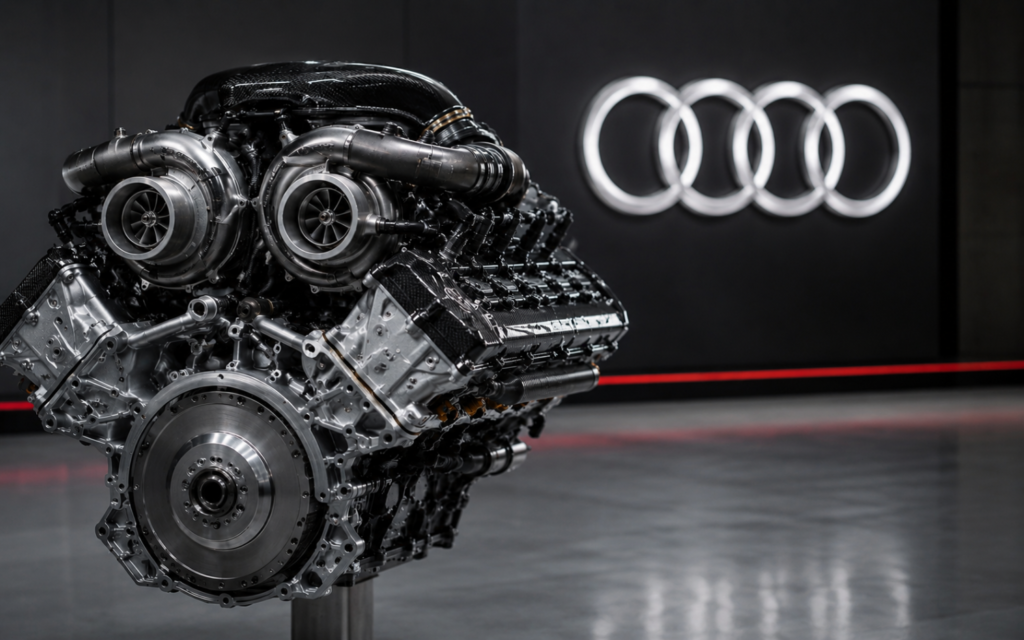
Audi has suggested an alternative approach, proposing a twin-turbo V8 engine featuring a “hot V” layout, where the turbochargers sit between the cylinder banks. The concept mirrors the powertrain used in Audi’s newly unveiled Nuvolari hypercar, which combines a four-litre twin-turbo V8 with a 30% hybrid element.
Dollner said the company has no issue with V8 engines themselves, noting that Audi’s road-car portfolio already includes such technology. He argued that the broader direction of the regulations is more important than focusing on a single technical feature.
When asked whether future engine rules could threaten Audi’s long-term commitment to Formula 1, Dollner dismissed concerns. He expressed confidence that discussions with governing bodies would produce a workable solution and reiterated that sustainable fuels remain a non-negotiable element of the sport’s future.
The FIA has the authority to introduce new engine regulations from 2031 because the agreements governing Formula 1’s teams and manufacturers expire after the 2030 season. However, major changes carry risks, particularly as the current hybrid era has helped attract new manufacturers including General Motors and Ford, encouraged Audi to join the championship, and convinced Honda to reverse its previous decision to leave the sport.
While most stakeholders agree that the existing power-unit regulations require refinement, the debate over what should replace them is only beginning.