
FIFA’s efforts to protect the exclusivity of its World Cup sponsors have unintentionally handed several non-partner brands a global marketing boost, with companies such as Levi’s, Heinz and Beats dominating online conversation despite having no official ties to the tournament.
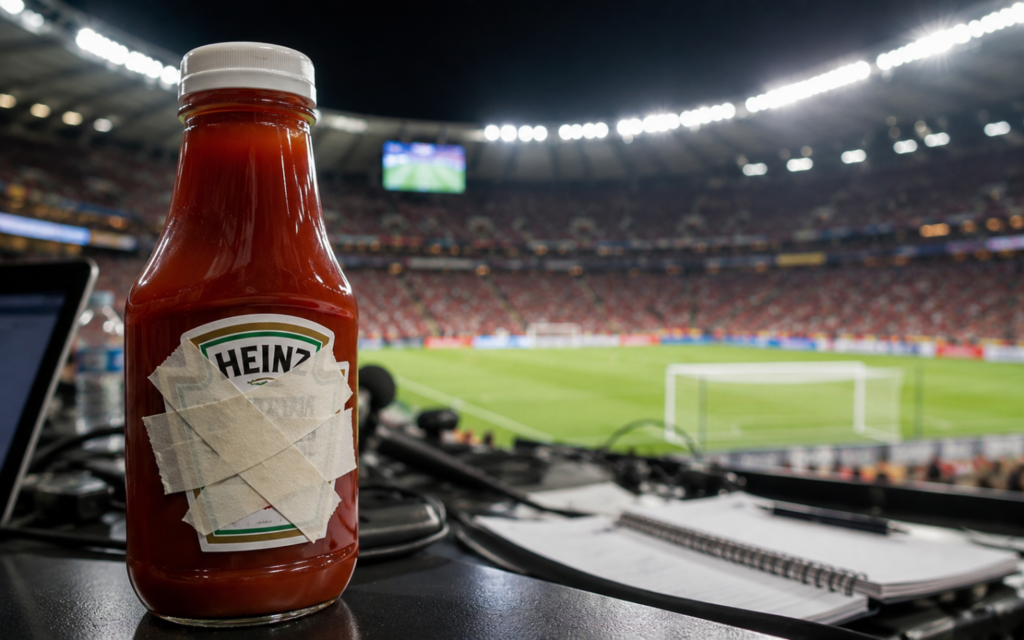
Throughout the competition, FIFA has taken visible steps to shield official sponsors by covering or removing rival branding. At Levi’s Stadium in San Francisco, the famous Levi’s sign has been hidden behind a large white covering, Heinz logos on ketchup bottles inside media areas have been taped over, and Germany midfielder Jamal Musiala was even photographed before a match with tape placed over the Beats logo on his headphones.
Rather than reducing exposure, those actions have drawn widespread attention to the brands involved. The situation reflects what is commonly known as the “Streisand Effect,” where attempts to suppress something instead make it more visible.
FIFA’s strict approach is designed to protect companies that invest millions of pounds for official sponsorship rights. Those agreements include exclusive marketing opportunities, making it essential for the governing body to limit the visibility of competing brands during the tournament. Measures range from renaming stadiums and restricting visible logos to controlling the use of tournament-related branding and imagery.
However, marketers have long found creative ways to benefit from major sporting events without becoming official sponsors, a strategy known as ambush marketing. FIFA has been combating the practice for more than three decades.
The tactic has produced memorable moments at previous World Cups. In 2006, Dutch supporters wearing branded Bavaria trousers were required to remove them before entering a stadium because Budweiser was the tournament’s official beer sponsor. Images of fans watching the match in their underwear quickly spread worldwide, generating enormous publicity for Bavaria without the company paying FIFA.
Four years later, South African airline Kulula withdrew an advertising campaign describing itself as the unofficial carrier of the “you-know-what” after FIFA objected. The controversy surrounding the campaign ultimately attracted more attention than the original advertisement.
The 2014 World Cup provided another high-profile example. While Sony held official sponsorship rights, Beats by Dre was prohibited from displaying its branding inside stadiums and official media areas. Nevertheless, many star players continued wearing Beats headphones while travelling, training and arriving for matches, helping the company remain highly visible throughout the tournament.
This year’s World Cup has produced similar results. Heinz transformed the taped-over ketchup bottles into a limited-edition product concept, while Beats used the image of Musiala’s covered headphones as a teaser for a previously unknown headphone model, turning FIFA’s restrictions into a marketing campaign.
Levi’s also capitalised on the attention after images of its covered stadium logo spread across social media. One TikTok video featuring the hidden sign attracted around nine million views, while the company later recreated the covered-logo design at stores in cities including London, Paris, Milan, Berlin, Hong Kong, locations across Brazil and Mexico, extending the campaign far beyond the tournament itself.
Despite the attention surrounding these unofficial campaigns, marketing experts note that ambush marketing and official sponsorship serve different purposes. Brands such as Levi’s, Heinz and Beats may generate significant online engagement, but official FIFA partners receive exclusive commercial rights, hospitality opportunities, event activations and formal association with one of the world’s largest sporting events.
While ambush campaigns can dominate headlines during a tournament, official sponsors often benefit from the long-term value of their association once the competition has ended. Whether the unofficial brands can maintain that momentum after the World Cup concludes remains to be seen.