
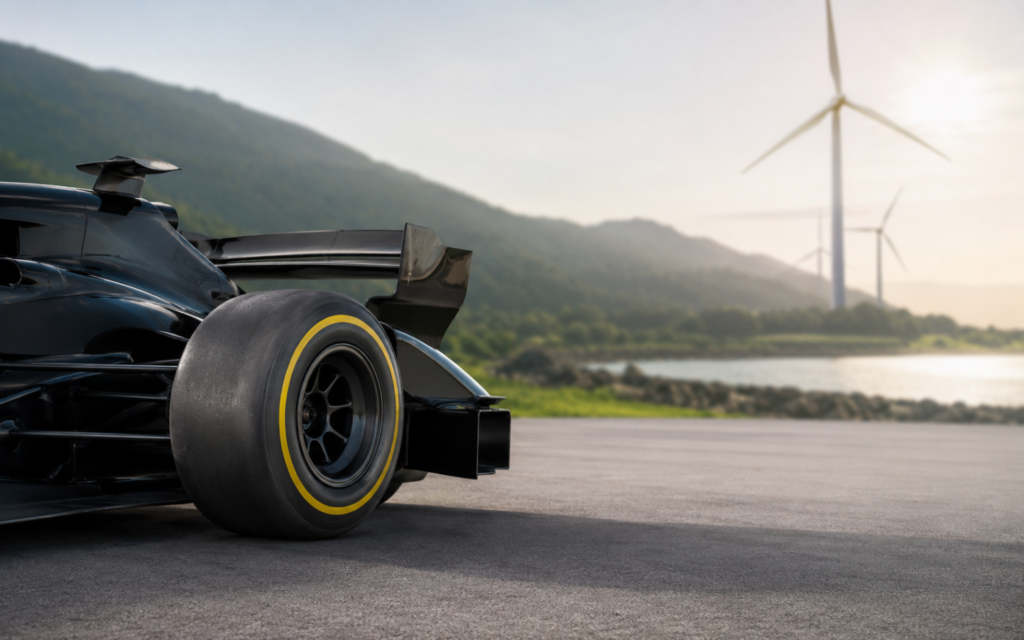
Formula 1 says it remains on course to meet its ambitious target of reaching net-zero carbon emissions by 2030 after reporting another significant reduction in its environmental footprint.
According to the sport’s latest sustainability review, total carbon dioxide emissions fell to 148,805 tonnes during the 2025 season. That represents a 35% reduction compared with the 2018 baseline and a further 12% decrease from 2024 levels.
The figures cover emissions generated by Formula 1’s own operations, as well as the factories, travel and race-related activities of all competing teams.
A major contributor to the reduction has been the sport’s efforts to improve logistics. Formula 1 has increasingly shifted freight transport from air to sea, expanded its use of sustainable aviation fuel and continued to reorganise the race calendar to reduce travel demands.
Emissions from factories and facilities have dropped by 64% since 2018 and by 14% compared with the previous year. Logistics-related emissions have also improved, falling 21% year-on-year and 29% compared with the 2018 benchmark.
Calendar adjustments have played an important role in these savings. Formula 1 has increasingly grouped races by region to allow equipment and personnel to travel more efficiently between events.
One recent example was the decision to schedule the Miami and Canadian Grands Prix back-to-back in 2026, rather than separating them with European rounds. Although not included in the 2025 report, Formula 1 estimates that change alone reduced logistics and travel emissions by nearly 3%.
Previous schedule changes have followed the same strategy. Since 2024, the Japanese Grand Prix has been held in spring instead of autumn, allowing it to be grouped more effectively with races in Australia and China.
The sport has also introduced further sustainability measures on track. Beginning in 2026, Formula 1 mandated the use of advanced sustainable fuels across competition. While race-day fuel use accounts for only a small proportion of overall emissions, these fuels are estimated to cut greenhouse gas emissions by around 80% compared with conventional fossil fuels.
Formula 1 said all emissions calculations are conducted through an independent third-party reporting platform designed to improve transparency and accuracy in data collection and methodology.
F1 president and chief executive officer Stefano Domenicali said the progress reflects a collective effort across the championship.
He noted that calendar changes, investment in sustainable fuels and alternative energy solutions have helped reduce the sport’s environmental impact while Formula 1 continues to expand its global audience.
Ellen Jones, Formula 1’s head of environmental, social and governance, highlighted increased investment in sustainable aviation fuel and the sport’s first investment in sustainable maritime fuel as key factors behind the latest reductions.
Formula 1’s Net Zero by 2030 strategy aims to achieve at least a 50% reduction in absolute emissions from 2018 levels. Any remaining unavoidable emissions will be addressed through carbon-offset programmes that meet recognised best-practice standards.