
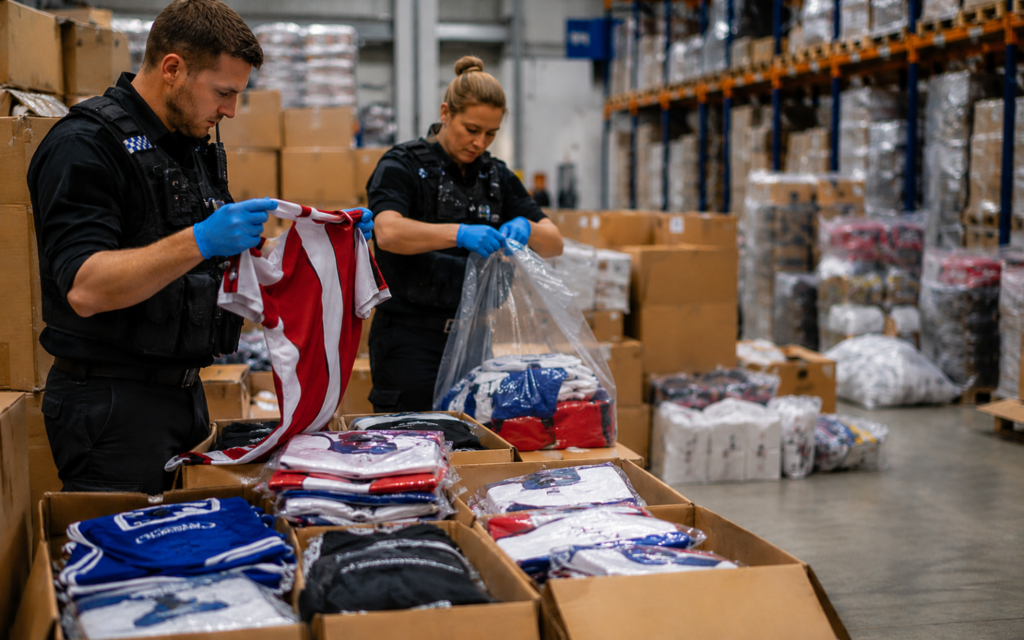
More than £18 million worth of counterfeit football shirts were confiscated across the UK during the 2026 FIFA World Cup as authorities warned that fake kits can pose serious safety risks in addition to supporting criminal networks.
The increase in football fever during the tournament led to a surge in demand for unofficial merchandise, prompting police to step up enforcement through Operation Bloxwich, a nationwide campaign targeting counterfeit goods. In total, officers from the Police Intellectual Property Crime Unit recovered more than 220,000 fake football-related items.
Among the largest seizures was a raid on a warehouse in Birmingham, where officers confiscated 1,618 counterfeit shirts featuring replicas of popular players, including France forward Kylian Mbappe and Norway striker Erling Haaland.
Police warned that while counterfeit shirts are often sold at a fraction of the price of official merchandise, they can present hidden dangers. Detective Sergeant Jamie Kirk of the City of London Police said the products are not subject to safety regulations and may contain harmful dyes, particularly posing risks to children. He added that the materials used can be significantly more flammable than genuine kits, making the apparent savings not worth the potential consequences.
Those concerns were reinforced by tests carried out by Cheshire Fire and Rescue Service. Firefighters compared counterfeit and authentic football shirts using blow torches and found the fake garments ignited and melted almost immediately, while the genuine shirts were far more resistant to catching fire.
Watch manager Dave Jackson said the results highlighted the dangers of counterfeit clothing, warning that such products could lead to severe burn injuries and that the lower purchase price should not outweigh the safety risks.
The UK Intellectual Property Office also urged consumers to avoid counterfeit merchandise. Head of intelligence Kate Caffrey said fake football shirts are not manufactured to British or European safety standards and are often produced in poor conditions with no oversight of the materials or chemicals used.
She also warned that counterfeit goods are supplied by organised criminal groups that take advantage of major sporting events and the upcoming Premier League season to flood the market with fake products. According to Caffrey, buyers cannot know where their money ultimately ends up when purchasing counterfeit goods.
The popularity of fake shirts is partly driven by price. Investigators found several websites selling counterfeit kits for as little as £12, while official Premier League replica shirts can cost from around £85, making cheaper alternatives attractive to many families despite the associated risks.