
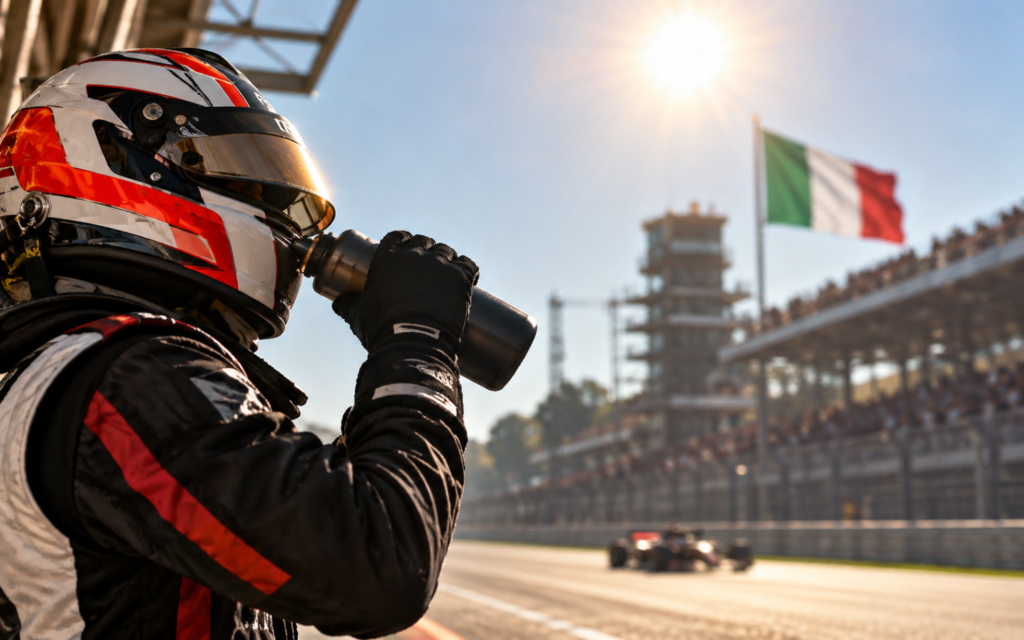
Formula 1 has officially classified the Italian Grand Prix as a heat-hazard event, with temperatures around Monza expected to remain well above 30C throughout the race weekend.
The designation is applied when forecasts indicate that ambient temperatures could exceed 31C during Sunday’s grand prix. Conditions in the Monza area, north-east of Milan, are expected to reach the mid-30s, continuing the extreme heat that has affected Italy during the summer.
Temperatures near Milan’s Linate airport had already climbed to 36C on Wednesday afternoon, underlining the conditions drivers and teams are preparing to face.
The heat-hazard ruling allows drivers to use Formula 1’s cockpit cooling system. The equipment circulates chilled liquid, including substances such as glycol, through tubes built into a fireproof garment worn beneath the driver’s race suit.
Using the system remains optional. However, drivers who decide against it must carry an additional 5kg of ballast in their cars, preventing them from gaining a weight advantage over competitors using the cooling equipment.
The Italian Grand Prix becomes the second Formula 1 event of the season to receive the heat-hazard classification. The Austrian Grand Prix was given the same status earlier in the summer.
Not every driver is comfortable with the cooling system. Some have found the equipment restrictive, while previous use has also highlighted the risk of coolant being exhausted before the end of a race. When that happens, the remaining liquid can warm to temperatures close to those inside the car, potentially reducing the system’s effectiveness.
Heat management has become an increasingly important issue in Formula 1. Cockpit temperatures can exceed 40C during particularly hot races, while drivers compete in several layers of fire-resistant clothing along with gloves, a balaclava and helmet.
With Monza forecast to remain extremely hot, managing driver temperatures and hydration is expected to be another significant challenge during the Italian Grand Prix weekend.