
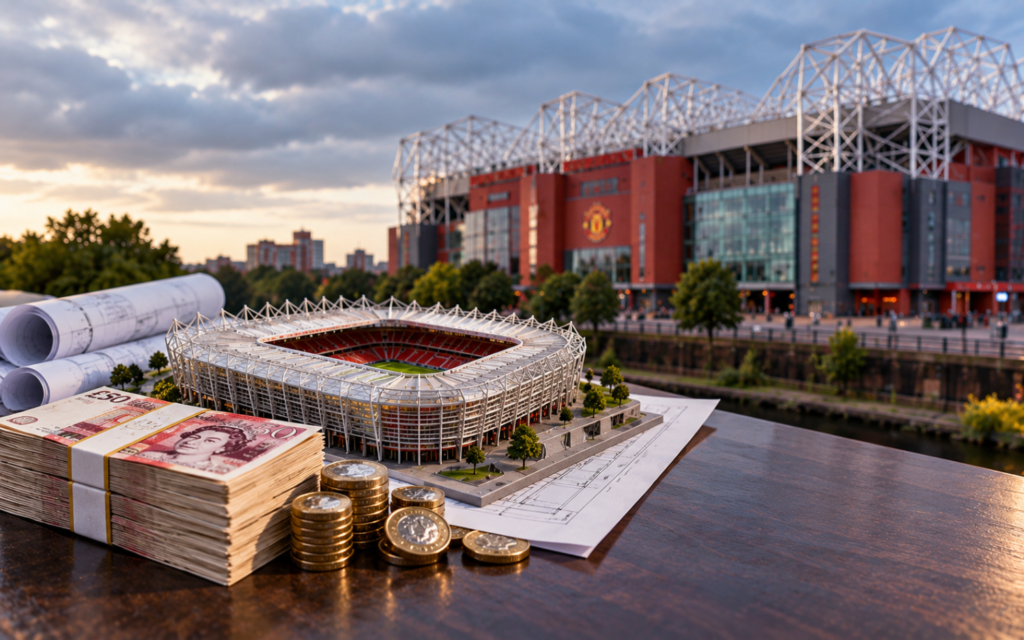
Manchester United’s total debt remains above £1bn despite significant cost-cutting measures under Sir Jim Ratcliffe, with the club confirming it has spent £63.5m acquiring land for its planned new stadium.
The latest financial results reveal record revenue of £677.6m and an operating profit of £22.6m, even though United did not participate in European competition for the first time in a decade. The figures mark a substantial improvement from the £113.2m loss recorded in 2023-24.
However, the financial recovery has done little to ease tensions among supporters. United sit 12th in the Premier League, have already exited the EFL Cup and face criticism over their summer transfer spending.
Rising Finance Costs and Stadium Investment
United’s net finance costs increased by 228.3% to £69.6m during the financial year, with the club attributing most of the rise to foreign exchange losses.
Football finance expert Kieran Maguire estimates that the club’s cumulative net finance costs have now surpassed £1bn since the Glazer family’s leveraged takeover in 2005.
United also confirmed that £63.5m of the additional $125m (£94.14m) borrowed through a summer refinancing arrangement was used to purchase land for their proposed new stadium.
The club has not disclosed how the remaining funds were allocated. The planned stadium, which would be constructed approximately 350 yards from Old Trafford, is expected to cost more than £2bn.
Although United’s overall debt has declined from £1.3bn at the end of December, it remains above £1bn.
The total includes £577.6m in historic debt and £111.4m outstanding under the club’s revolving credit facility. United also reported £473m in trade and other payables, approximately 75% of which relates to unpaid transfer fees, according to club sources.
The club has additionally reduced the potential compensation owed to former manager Ruben Amorim. His appointment at AC Milan means United have avoided £8.5m of a previously projected £16.5m termination package.
Transfer Spending Fuels Supporter Frustration
United invested £148m in three summer signings for Michael Carrick’s squad, bringing in Carlos Baleba, Andrey Santos and Youri Tielemans.
That expenditure was less than a third of Manchester City’s £458m outlay and also fell below the amount spent by newly promoted Ipswich Town.
Supporters have questioned the decision not to strengthen several other positions, particularly left-back and centre-forward.
Luke Shaw has already missed three matches through injury, leaving United without an additional specialist left-back to challenge him for a starting place.
Benjamin Sesko also missed pre-season while recovering from a shin problem that has since resurfaced, raising concerns about the lack of additional attacking cover.
United maintain that the extra financing was designated for their stadium development, although the borrowing remains recorded in the club’s accounts.
Chief executive Omar Berrada said the record revenue demonstrated the strength of United’s business and the impact of financial changes introduced over the previous two years.
He also emphasised the importance of maintaining financial discipline while continuing to invest in both the men’s and women’s teams. United’s men’s side has returned to Champions League football at Old Trafford.
The women’s team has faced separate criticism over summer recruitment. United currently occupy second-bottom place in the Women’s Super League after collecting just one point from their opening three matches.
Salary Reductions Reflect Wider Restructuring
Ratcliffe’s efforts to reduce United’s operating costs have included two rounds of redundancies, resulting in the loss of approximately 450 jobs.
The club’s latest financial figures show that salary expenditure fell by £11.3m to £302m.
United attributed the reduction to changes in the composition of the men’s first-team squad and savings generated by workforce reductions implemented over the previous two financial years.
Despite the improvement in revenue, operating profitability and salary expenditure, the club continues to face substantial debt obligations alongside the financial demands of its proposed stadium development.