
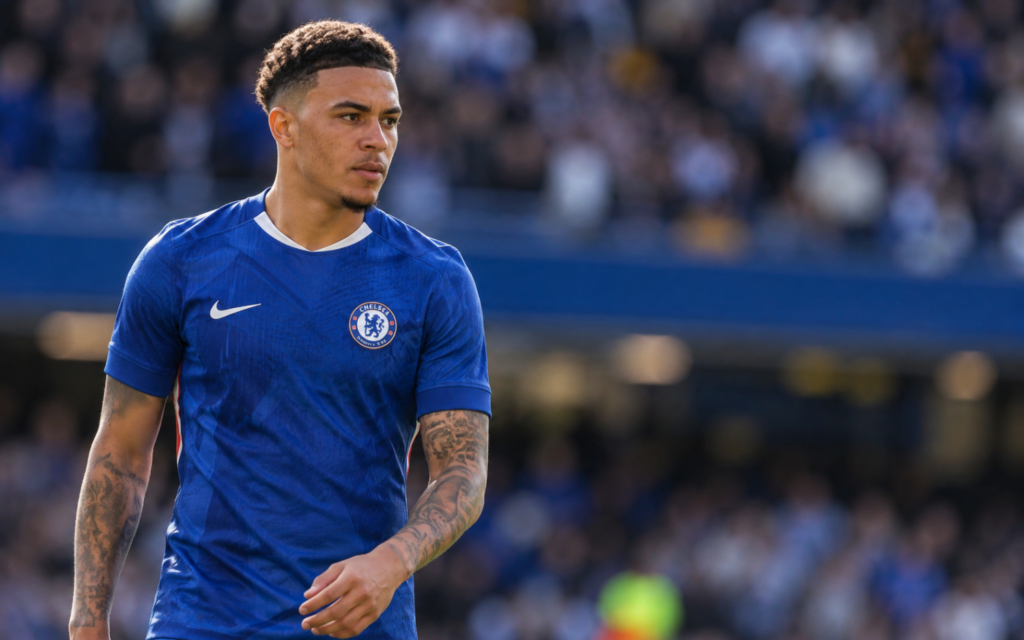
Morgan Rogers’ rise to becoming Chelsea’s £117m club-record signing was far from straightforward, with the England international having seen his value fall to just £1m only three years earlier.
Before emerging as one of English football’s most valuable players, Rogers endured a series of challenging loan spells that forced him to adapt quickly to senior football and reconsider whether he would fulfil the promise he had shown as a teenager.
The former West Bromwich Albion academy standout was a regular England youth international before joining Manchester City, but his transition from academy football into the professional game proved difficult.
Lincoln loan provides first breakthrough
Rogers’ first meaningful exposure to senior football came at Lincoln City, where he joined on loan as an 18-year-old.
Manager Michael Appleton, who already knew Rogers from his time working within West Brom’s academy, pushed to bring him to Sincil Bank and quickly trusted the teenager with an important role.
Rogers scored six goals and registered two assists across 28 appearances as Lincoln reached the League One play-off final, eventually losing to Blackpool.
Appleton was particularly impressed by Rogers’ willingness to embrace the physical and defensive demands of senior football rather than focusing purely on attacking contributions. Despite his age, he became comfortable speaking during team meetings and taking responsibility on the pitch.
That loan helped Rogers move beyond the technical environment of academy football and begin developing the physicality and mentality required for the professional game.
Bournemouth move fails to deliver
His performances earned him a Championship opportunity with Bournemouth, but that spell became one of the biggest setbacks of his early career.
Rogers made only three starts and scored once under Scott Parker as Bournemouth secured promotion to the Premier League.
The club had viewed him as a potential number 10, but Parker’s system offered few opportunities in that role. Rogers consequently struggled for regular minutes and was unable to establish himself despite arriving with a growing reputation.
Bournemouth reportedly had the option to sign him permanently for around £9m, but the move never materialised.
His loan was eventually cut short, sending him back to Manchester City’s academy setup.
Former Bournemouth defender Steve Cook later described Rogers’ experience as an example of how young players can benefit from setbacks, with his attitude, work ethic and willingness to learn helping him continue progressing despite limited playing time.
Blackpool spell adds further uncertainty
Rogers’ next loan was delayed by injury before he reunited with Appleton at Blackpool in January.
However, the reunion lasted only one match before Appleton was dismissed. Mick McCarthy replaced him, and Rogers found himself adapting to another managerial change.
He went on to make 20 appearances for Blackpool, split between starts and substitute appearances, while scoring once.
The club endured a turbulent campaign, appointing a third manager in April before eventually being relegated from the Championship.
For Rogers, the period brought more uncertainty. He was receiving fewer opportunities than expected while watching other players from his age group progress more quickly.
At times, he began questioning whether he would establish himself at the highest level.
Middlesbrough move changes trajectory
While Rogers’ career had stalled, close friend Cole Palmer was following a very different route.
Palmer remained at Manchester City before joining Chelsea for £42.5m and quickly earning senior England recognition through his performances at Stamford Bridge.
Rogers, meanwhile, left City for Middlesbrough in a deal worth only around £1m.
That transfer proved decisive.
At Middlesbrough, he finally gained consistent senior football and produced five goals and three assists during the club’s six-match run to the Carabao Cup semi-finals.
His performances attracted Aston Villa, where several coaches who knew Rogers from his West Brom days were working in senior academy positions.
Villa initially paid around £8m to sign him during the winter transfer window, giving Rogers the opportunity to continue his development at Premier League level.
Setbacks shape £117m Chelsea star
Rogers’ eventual transformation into a £117m Chelsea signing reflects how dramatically a player’s career can change within only a few seasons.
His early progress was repeatedly interrupted by limited minutes, managerial changes, injury and relegation, while players he had grown up alongside appeared to move ahead of him.
Rather than ending his development, those experiences shaped the player he eventually became.
The academy prospect once valued at around £9m saw his price collapse to £1m before rebuilding his career through Middlesbrough and Aston Villa.
Now Chelsea’s record signing, Rogers arrives at Stamford Bridge having taken a route very different from many elite young players — one defined as much by difficult loan spells and stalled progress as by the performances that eventually made him one of English football’s most expensive players.