
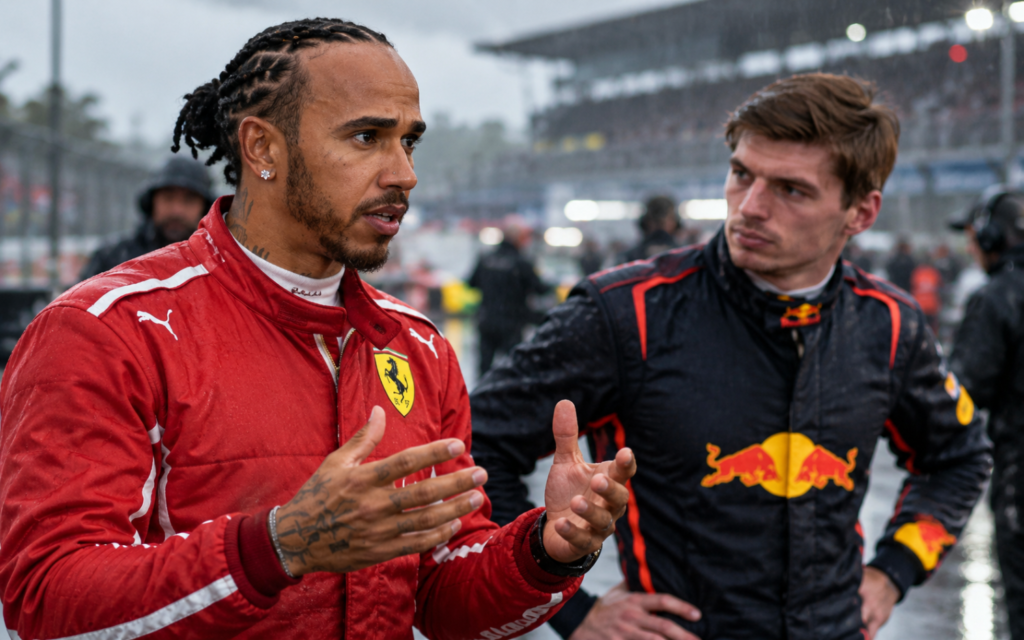
A software fault affecting the deployment of electrical power left several Formula 1 cars barely moving before the Bahrain Grand Prix in Malaysia, creating an unusual and chaotic opening to a race already delayed by severe weather.
Max Verstappen and Lewis Hamilton were among the drivers affected as the field attempted formation laps behind the safety car in heavy rain. Both were due to start from the front row, but the technical issue caused a number of cars to crawl around the circuit at dramatically reduced speed.
The race had already been postponed for close to an hour following a tropical downpour. When conditions improved enough for cars to assess the track, the malfunction became immediately apparent.
Software fault triggered by unusual conditions
The issue was linked to software controlling how the new-generation power units deploy electrical energy in wet conditions. A combination of low grip, reduced engine speeds and specific characteristics of the circuit triggered a scenario that had not appeared during previous testing.
Verstappen was one of the first drivers to encounter the problem and initially believed the cars behind him were deliberately holding position. Several others then suffered the same loss of performance, with groups of cars running alongside each other at unusually low speeds.
Hamilton was forced to stop on track, shut down his car and restart the system before he could continue.
The malfunction was eventually resolved, allowing the race to begin. Verstappen went on to take his first victory of the season, while Hamilton recovered to finish third. Mercedes driver George Russell later retired with a separate power-unit failure.
FIA promises full investigation
FIA single-seater director Nikolas Tombazis confirmed that the governing body will conduct a detailed investigation into the incident.
The software had previously been tested, but the exact combination of circumstances seen in Malaysia had not been replicated. Limited wet-weather running during the season also meant there had been few opportunities to expose the system to similar conditions.
FIA engineers worked on revised software while the start remained suspended, aiming to prevent the same malfunction from continuing once the race resumed.
The episode has added to concerns about the complexity of Formula 1’s latest hybrid power units, which were introduced this season with electrical energy playing a substantially larger role in overall performance.
New power units continue to create challenges
The current regulations are designed around a near-even balance between combustion power and electrical output. However, because the cars cannot deploy maximum combined energy continuously, teams and regulators have had to introduce increasingly sophisticated systems governing energy recovery and deployment.
Drivers have repeatedly raised concerns this year about some of the unusual techniques required to manage the new engines, particularly when electrical energy becomes limited.
Further regulatory adjustments have already been agreed for next season in an effort to improve the balance between electrical and combustion power and reduce some of the complications encountered during the first year of the rules.
McLaren team principal Andrea Stella said the incident highlighted the challenges that can arise under a new and technically demanding regulation set. He also noted that Formula 1 has generally managed to improve the performance and racing characteristics of the new engines despite the difficulties seen during development.
Grid order also thrown into question
The software failure created an additional complication because the formation laps left cars out of their original positions.
Under one interpretation of the regulations, the changed running order could potentially have influenced the grid for the restart. Race officials instead decided to restore the original qualifying order because the disruption had been caused by a system problem outside the teams’ control.
Mercedes deputy team principal Bradley Lord supported that approach, arguing that allowing the scrambled order to determine the start would have created greater confusion for viewers and unfairly penalised drivers affected by the fault.
The FIA is now expected to review both the technical failure and the procedural questions it created, with the goal of ensuring the same scenario cannot disrupt another Grand Prix.