
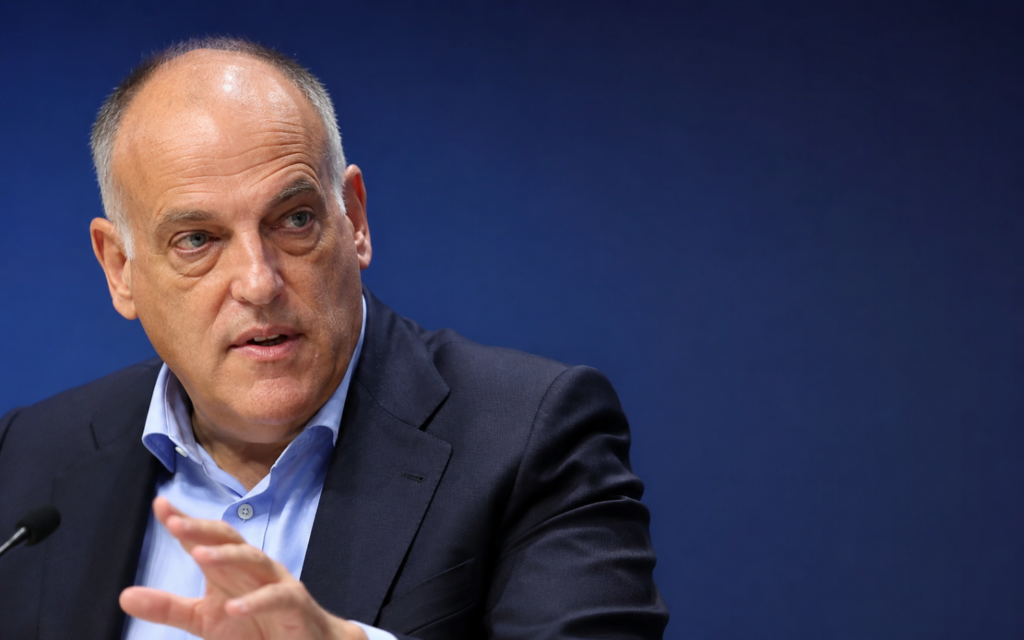
La Liga president Javier Tebas has launched a strong attack on FIFA, claiming a culture of “complicit silence” is allowing football’s governing body to avoid accountability following the controversial decision involving United States forward Folarin Balogun at the 2026 World Cup.
Balogun was allowed to feature in the USA’s last-16 match against Belgium despite receiving a red card in the previous round against Bosnia-Herzegovina. FIFA’s disciplinary committee chose to suspend his automatic one-match ban for 12 months, making him available for selection.
The decision drew heavy criticism from UEFA, which described the move as “unprecedented, incomprehensible and unjustifiable”. However, reaction from other football organisations has been limited.
South American confederation CONMEBOL publicly supported Brazilian referee Raphael Claus, who sent Balogun off after a VAR review, following comments from US president Donald Trump suggesting the official was “a bit suspect”. However, CONMEBOL did not directly challenge FIFA’s handling of the case or Trump’s involvement after he revealed he had requested a review of the suspension.
Tebas argued that the Balogun case represents a much wider issue within football governance, describing it as only the “tip of the iceberg”. He accused FIFA of years of actions that have damaged trust in the organisation and questioned the way major decisions are made.
The La Liga chief claimed FIFA operates without enough transparency, saying important choices are often effectively decided before formal votes and without proper involvement from domestic leagues.
Tebas said many figures within football understand the problem but choose not to speak out because remaining silent is easier than demanding independence, openness and stronger governance.
He added that global football needs organisations that respect regulations and remain accountable, rather than making decisions that damage confidence among fans, clubs, leagues and players.