
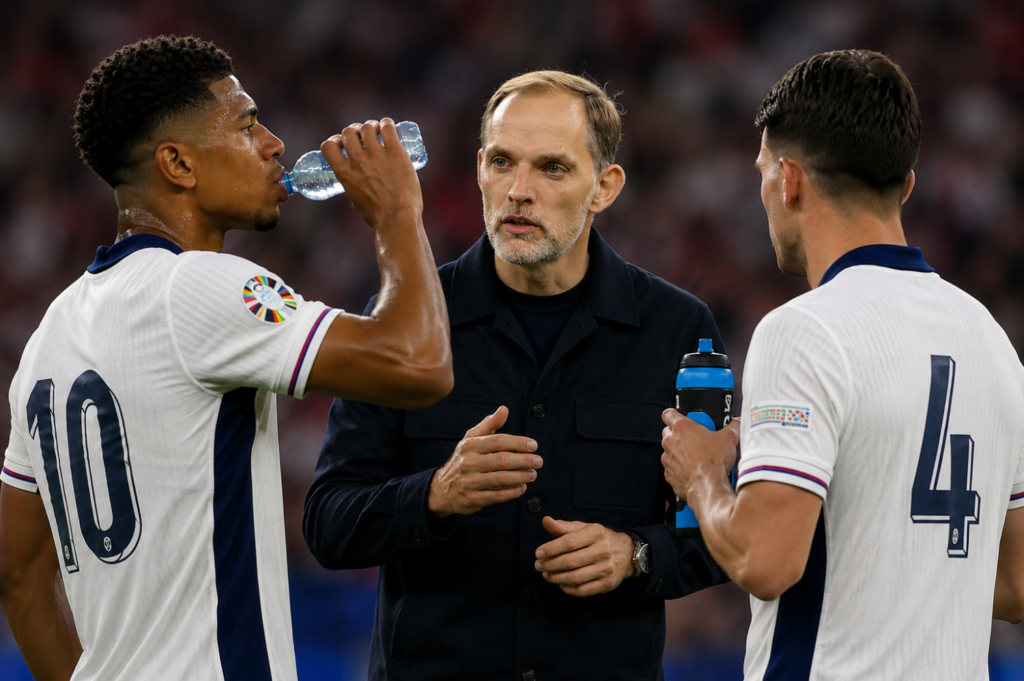
Hydration breaks introduced at the 2026 World Cup are proving unpopular with many supporters, even as players and coaches acknowledge their practical benefits in challenging summer conditions across North America.
England’s 4-2 victory over Croatia in Dallas provided another example of growing fan frustration with the mandatory pauses. During the match, boos echoed around the air-conditioned stadium when play stopped for one of the scheduled three-minute hydration breaks.
The breaks, introduced by FIFA to help players cope with high temperatures and humidity during the tournament, take place once in each half. However, many supporters argue they disrupt the rhythm of matches and provide additional opportunities for broadcasters to show advertising.
Several England fans leaving the stadium questioned the need for the stoppages in venues equipped with climate control systems. While some accepted that breaks could be necessary in extreme outdoor heat, they felt they were unnecessary in air-conditioned arenas and interrupted the natural flow of the game.
The criticism has not been limited to England matches. Similar reactions have been heard throughout the tournament. Supporters booed hydration breaks during Norway’s 4-1 victory over Iraq in Boston, despite temperatures sitting at a comfortable 23C. Fans also voiced their displeasure during Sweden’s 5-1 win over Tunisia and Spain’s goalless draw with Cape Verde, which took place inside Atlanta’s air-conditioned stadium.
For some supporters, the concern goes beyond the pauses themselves. They believe the system changes the nature of football by effectively dividing matches into four quarters rather than two halves.
Others see advantages. Some fans argue the breaks provide opportunities to visit concessions or facilities without missing important moments, while acknowledging that commercial interests are likely to remain part of the arrangement.
Players and coaches, meanwhile, have largely embraced the additional stoppages. England goalkeeper Jordan Pickford described them as useful preparation for fixtures in cities such as New York and Boston, where conditions could be more demanding later in the tournament.
Defender Nico O’Reilly admitted England have adapted well enough not to require the breaks but said they remain valuable opportunities to receive tactical instructions and rehydrate.
Coaches have also used the pauses to reorganise their teams and communicate directly with players during matches. Netherlands captain Virgil van Dijk acknowledged that the interruptions may not make ideal television viewing but accepted their presence as part of the competition.
France manager Didier Deschamps noted that the breaks have effectively created four periods of play rather than the traditional two-half structure. He said teams simply have to adapt to the format that has been introduced.
FIFA has given no indication that hydration breaks will become a permanent feature of future World Cups. They were introduced following concerns about the conditions experienced during last year’s Club World Cup in the United States.
Despite that uncertainty, some supporters fear the concept could eventually spread more widely throughout football. Many remain concerned that temporary measures introduced for player welfare could evolve into regular commercial breaks, fundamentally changing the pace and character of the sport.