
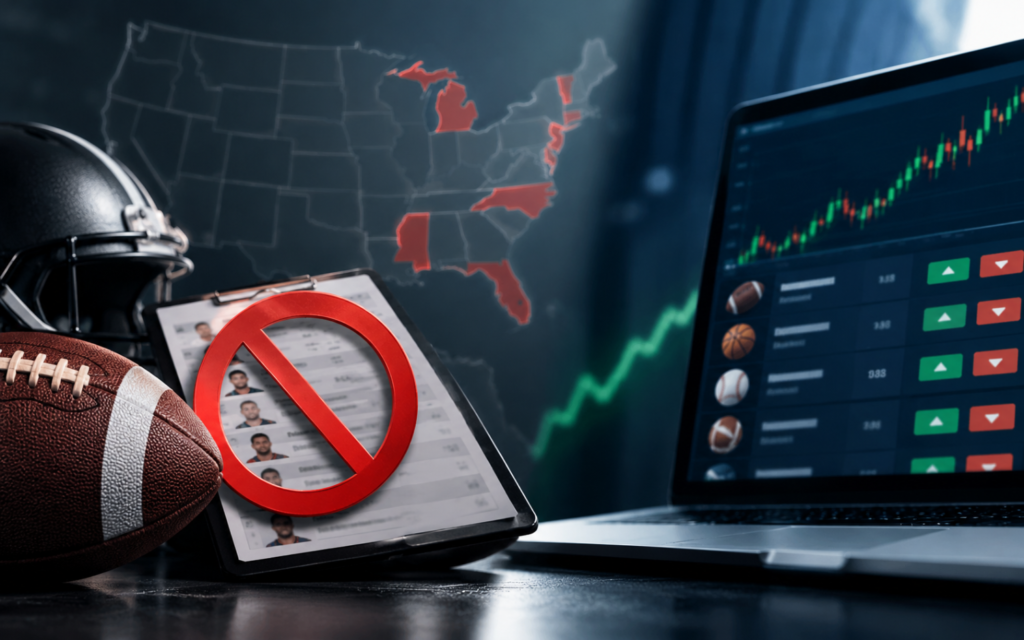
Underdog is withdrawing its fantasy sports contests from seven US states as the company prioritises its growing prediction-markets business amid continued regulatory tension between state gaming authorities and federally regulated event-contract platforms.
The operator will stop offering fantasy contests, including its Best Ball Drafts product, in Maryland, Massachusetts, Michigan, Mississippi, New Jersey, Ohio and Pennsylvania. Existing entries will continue to settlement, but customers will no longer be able to enter new contests after the relevant cutoff dates.
According to Underdog’s current customer guidance, fantasy contests will become unavailable in Mississippi from September 9, while the change takes effect in the other six affected states on September 10.
Founder and CEO Jeremy Levine said the decision followed regulatory positions in those jurisdictions that Underdog cannot simultaneously operate state-regulated fantasy products and offer event contracts under Commodity Futures Trading Commission oversight.
The company therefore faced a choice between retaining its fantasy licences in the affected states or continuing to make its broader prediction-market offering available where permitted. Underdog opted to prioritise prediction markets, despite Drafts being one of the products on which the business was originally built.
Underdog indicated that Drafts currently generate substantially less usage than some of its other products, although Levine said the company remains committed to the format and is considering ways to restore wider access in the future. No timetable or specific plan has been announced.
Prediction-market availability will not be identical across all seven states. Underdog’s eligibility information currently lists Prediction Picks as available in Maryland, Massachusetts, Mississippi, New Jersey, Ohio and Pennsylvania, while Michigan remains excluded from the product.
The move highlights the increasingly complicated regulatory environment surrounding sports-related event contracts in the US. Prediction-market operators argue that their contracts fall under federal commodities law and CFTC oversight, while a number of state regulators maintain that sports event contracts effectively constitute sports wagering and should therefore comply with state gambling laws.
Several of the states affected by Underdog’s fantasy withdrawal have taken legal or regulatory action against prediction-market operators. Michigan, for example, has pursued restrictions against sports event contracts, while other states including New Jersey have been involved in broader challenges over whether federal commodities regulation overrides state gambling rules.
Underdog has been expanding rapidly beyond its original fantasy sports business. Its increased focus on prediction markets comes as the company prepares for a major ownership change after UK financial technology group IG Group agreed in July to acquire Underdog for total consideration of up to approximately $1.3 billion. The transaction remains subject to regulatory approvals.
The decision to sacrifice fantasy licences in several significant markets underlines how important prediction markets have become to Underdog’s wider US strategy, even as disputes over who has authority to regulate sports-related event contracts remain unresolved.